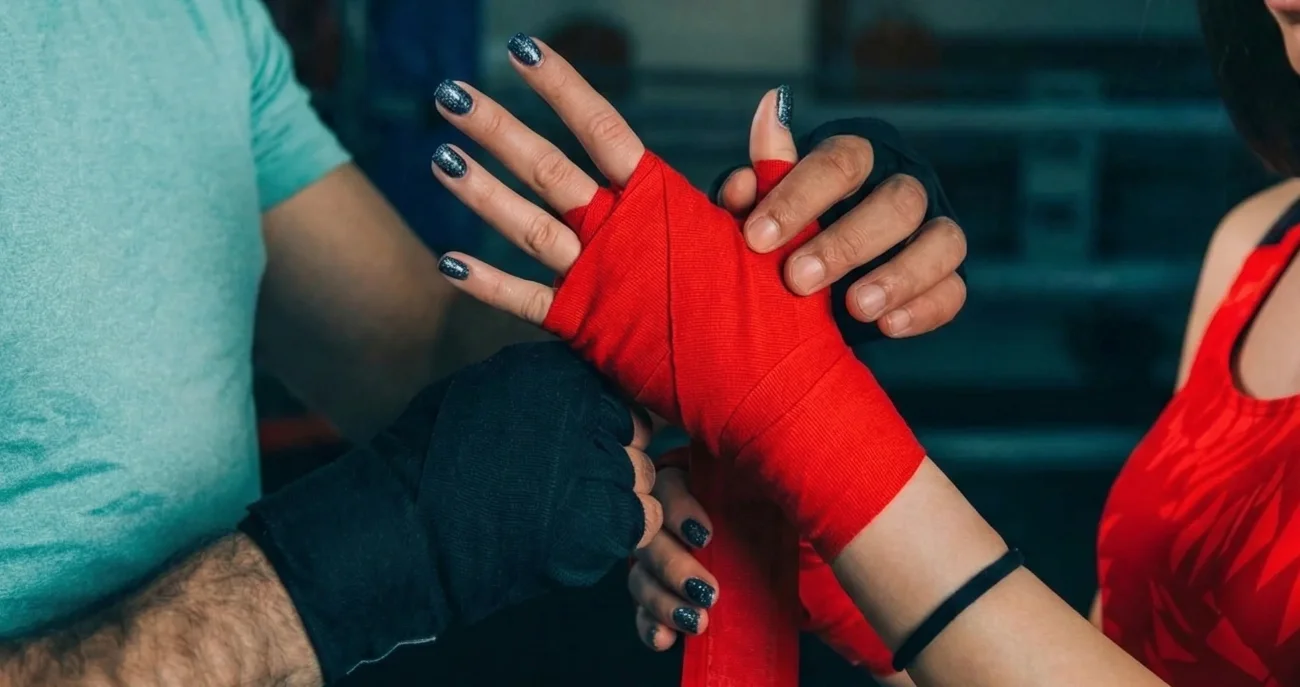
If you are new to boxing, one of the first habits you should build is wrapping your hands before every session. Many beginners focus on gloves and punching technique, but hand wraps are just as important as the gloves themselves. Without proper wrapping, your wrists may bend on impact, your knuckles can absorb too much force, and the small bones in your hands have less support than they need during training.
Whether you are hitting the heavy bag, working on focus mitts, doing light technical drills, or preparing for sparring, a good hand wrap helps create structure around the hand. It does not make you invincible, but it does reduce unnecessary movement and gives your hands extra protection where it matters most. In simple terms, hand wraps help hold everything together.
In this guide, you will learn exactly how to wrap your hands for boxing step by step, why each stage matters, what mistakes to avoid, and how tight your wraps should feel. By the end, you should be able to wrap your hands with confidence before every workout.
Why Hand Wraps Matter in Boxing
Your hands contain many small bones, joints, tendons, and ligaments. When you punch, all of that force travels through a relatively small surface area, especially across the knuckles and wrist. Gloves add padding, but gloves alone are not enough to stabilize the hand properly. That is where wraps come in.
A proper boxing hand wrap does four important things. First, it adds light padding around the knuckles. Second, it helps keep the wrist in a stronger position. Third, it creates support across the back of the hand and between the fingers. Fourth, it can improve overall comfort inside the glove by reducing friction and unwanted movement.
This is especially important for beginners. New boxers often hit the bag with poor wrist alignment, overextend on straight punches, or land with more force than structure. Hand wraps are not a replacement for good technique, but they help reduce the consequences of small technical mistakes while you are learning.
What You Need Before You Start
The most common choice for boxing is a pair of traditional hand wraps, usually around 180 inches long. These are long enough for most adults and give you enough material to wrap the wrist, knuckles, and fingers properly. Some people use shorter wraps, but they often provide less support and fewer layering options.
You will also want to make sure your wraps are rolled correctly before you begin. The thumb loop should be easy to find, and the wrap should unroll smoothly as you move around the hand. If the wrap is tangled or reversed, the process becomes slower and more frustrating than it needs to be.
Traditional wraps are usually the best option for boxing training. Quick gel wraps may be convenient, but they do not always give the same level of wrist support or custom fit. If you want proper protection and a technique you can rely on, classic wraps are the better long-term choice.
How to Wrap Your Hands for a Punching Bag
If you are training on a punching bag, hand wrapping is just as important as it is for boxing or sparring. In fact, many beginners underestimate how much impact the heavy bag puts on the knuckles and wrists.
The good news is that you do not need a completely different technique. The basic method of wrapping your hands for boxing works perfectly for heavy bag training as well.
However, when wrapping hands for a punching bag, it is often a good idea to add slightly more padding around the knuckles and ensure your wrist is tightly secured. The repetitive impact from bag work can put extra stress on your hands over time.
- Focus on knuckle protection: add an extra layer if needed.
- Secure the wrist tightly: this helps prevent injuries during repeated punches.
- Keep it comfortable: avoid wrapping too tight to maintain proper circulation.
Training mostly on a heavy bag? You may also want to choose gloves designed for durability and support. See the best boxing gloves for heavy bag training.
How to Wrap Your Hands for Boxing Step by Step
There are slightly different methods depending on the coach, gym, or fighter, but the basic structure is always similar. The goal is not to memorize one magical formula. The goal is to learn a wrapping pattern that protects the wrist, secures the knuckles, and keeps the hand comfortable inside the glove.
Step 1: Put the Loop Around Your Thumb
Start by placing the thumb loop around your thumb. Make sure the wrap lies flat and does not twist. The wrap should come across the back of your hand, not across the palm in an awkward direction. This starting position sets up the rest of the wrap, so it is worth checking before moving on.
Step 2: Wrap the Wrist 3 to 4 Times
Begin by wrapping around the wrist three or four times. This creates your foundation. The wrist is one of the most vulnerable points in boxing, especially when straight punches land with poor alignment. A solid wrist wrap helps keep the joint stable and reduces the chance of bending on impact.
The wrap should feel snug, but not so tight that your hand starts to throb or your fingers go numb. A good rule is simple: supportive, not restrictive. If you cannot open and close your hand comfortably, you probably wrapped the wrist too tightly.
Step 3: Go Across the Knuckles 3 to 4 Times
After building the wrist base, bring the wrap across the knuckles. Most boxers create three or four layers here, depending on wrap length and personal preference. Keep your fingers slightly spread while doing this, because it helps the wrap sit more naturally across the hand.
This part adds impact protection, but it should still lie flat. If the material bunches up, it can become uncomfortable inside the glove and create pressure points during training. Smooth layers are better than thick, messy ones.
Step 4: Return to the Wrist
Once you have covered the knuckles, bring the wrap back around the wrist once. This reconnects the knuckle section to your foundation and keeps the wrap structure balanced. Think of the wrap as a support system, not a random collection of layers. Each section should reinforce another.
Step 5: Wrap Between the Fingers
Next, pass the wrap between the fingers. A common sequence is between the pinky and ring finger first, then between the ring and middle finger, and finally between the middle finger and index finger. After each pass, bring the wrap back around the wrist to lock it in place.
This part helps separate the fingers slightly and improves the overall structure of the wrap. It also reduces bunching in the glove and adds a cleaner fit around the hand. Beginners sometimes skip this step, but it makes a real difference in comfort and support.
Step 6: Reinforce the Knuckles and Back of the Hand
After going between the fingers, bring the wrap back over the knuckles again if you have enough material. You can also cross over the back of the hand in an X-pattern, depending on how much support you want and how long your wraps are. This creates extra structure and helps tie the entire wrap together.
At this point, the hand should feel compact and secure. Not stiff, not cut off, but held together. You should be able to make a fist comfortably and feel that the knuckles are padded and the wrist is more stable than before.
Step 7: Finish Around the Wrist and Secure the Velcro
Use the remaining wrap to finish around the wrist. This is usually the best place to end, because it locks the whole wrap together and keeps the closure away from the knuckles or palm. Secure the Velcro firmly so the wrap stays in place throughout the session.
Before putting on your gloves, open and close your hand several times. Make a fist, relax it, and rotate your wrist gently. If anything feels overly tight, twisted, or uncomfortable, unwrap and do it again. It is better to take one extra minute than to train with a bad wrap for an hour.
How Tight Should Boxing Hand Wraps Be?
This is one of the most common questions beginners ask, and for good reason. If your wraps are too loose, they will not provide much support. If they are too tight, they can restrict circulation and make your hands uncomfortable inside the gloves.
A proper wrap should feel secure and supportive, but you should still be able to move your fingers normally. You should be able to make a fist without sharp pressure. Your fingertips should not go numb, cold, or tingly. If they do, the wrap is too tight and you should redo it.
Many boxers like the wrap to feel slightly tighter when the hand is open and more natural when making a fist. That is usually a good sign, because the hand is most compact in punching position. Just make sure the pressure is even and not concentrated in one area.
Common Mistakes When Wrapping Your Hands
- Wrapping too loosely so the support disappears once the glove goes on.
- Wrapping too tightly and cutting off circulation to the fingers.
- Skipping the wrist and focusing only on knuckle padding.
- Letting the wrap twist and bunch up, creating pressure points inside the glove.
- Ignoring the area between the fingers, which often improves overall structure.
- Using damaged, stretched-out, or poorly rolled wraps that no longer stay flat.
These mistakes are common, especially at the beginning. The good news is that hand wrapping improves quickly with repetition. After a week or two of consistent practice, most people become much faster and more precise.
Do You Need Different Wrapping for Bag Work and Sparring?
For most people, one reliable wrapping method is enough for all standard boxing training. You do not necessarily need a special wrap style for every session. What matters most is that your wrist is stable, your knuckles are protected, and the wrap fits comfortably in your gloves.
That said, some boxers prefer slightly more knuckle padding for heavy bag work, especially if they throw a lot of power shots. Others prefer a cleaner, lighter feel for technical drills or mitt work. As you gain experience, you may find small adjustments that work better for your style.
Beginners should keep it simple. Learn one good method first. Once that becomes automatic, you can experiment with small changes if needed.
Practical Tips for Beginners
- Practice wrapping your hands at home even when you are not training.
- Keep your wraps washed and fully dried after workouts.
- Replace wraps that have lost elasticity or no longer fasten well.
- Always test the fit before putting on your gloves for a full session.
- Ask a coach to check your wrap once or twice if you are unsure.
One of the easiest ways to improve is repetition. The first few times may feel slow and awkward, but eventually the process becomes automatic. Once that happens, wrapping your hands takes only a few minutes and becomes part of your pre-training routine.
Frequently Asked Questions
Do I need hand wraps if I already have boxing gloves?
Yes. Gloves provide padding, but wraps provide structure and support. Together, they work much better than gloves alone.
Can beginners use quick gel wraps instead?
They can, but traditional wraps usually offer a better fit and better wrist support. Quick wraps are convenient, but they are not always the best choice for long-term boxing training.
How long should boxing hand wraps be?
For most adults, 180-inch wraps are the standard choice. They provide enough length to support the wrist, knuckles, and fingers properly.
Should hand wraps hurt?
No. They should feel snug and supportive, but not painful. If your fingers tingle or your hand feels compressed in a bad way, the wraps are too tight.
How often should I wash my wraps?
Ideally, after every few sessions, depending on how much you sweat. Clean wraps help with hygiene, smell, and glove care.
Final Thoughts
Learning how to wrap your hands for boxing is one of the simplest and most useful skills you can build as a beginner. It does not take long to learn, it costs very little, and it can make a major difference in comfort, safety, and confidence during training.
A good wrap protects the knuckles, supports the wrist, improves glove fit, and helps you train more consistently. It will not fix poor punching technique, but it gives your hands the structure they need while you improve. That is why experienced boxers treat hand wrapping as a basic part of the sport rather than an optional extra.
If you are just starting out, focus on building a clean, repeatable method. With a bit of practice, you will be able to wrap both hands quickly and correctly before every workout.
Related Articles and Reviews
Check it now