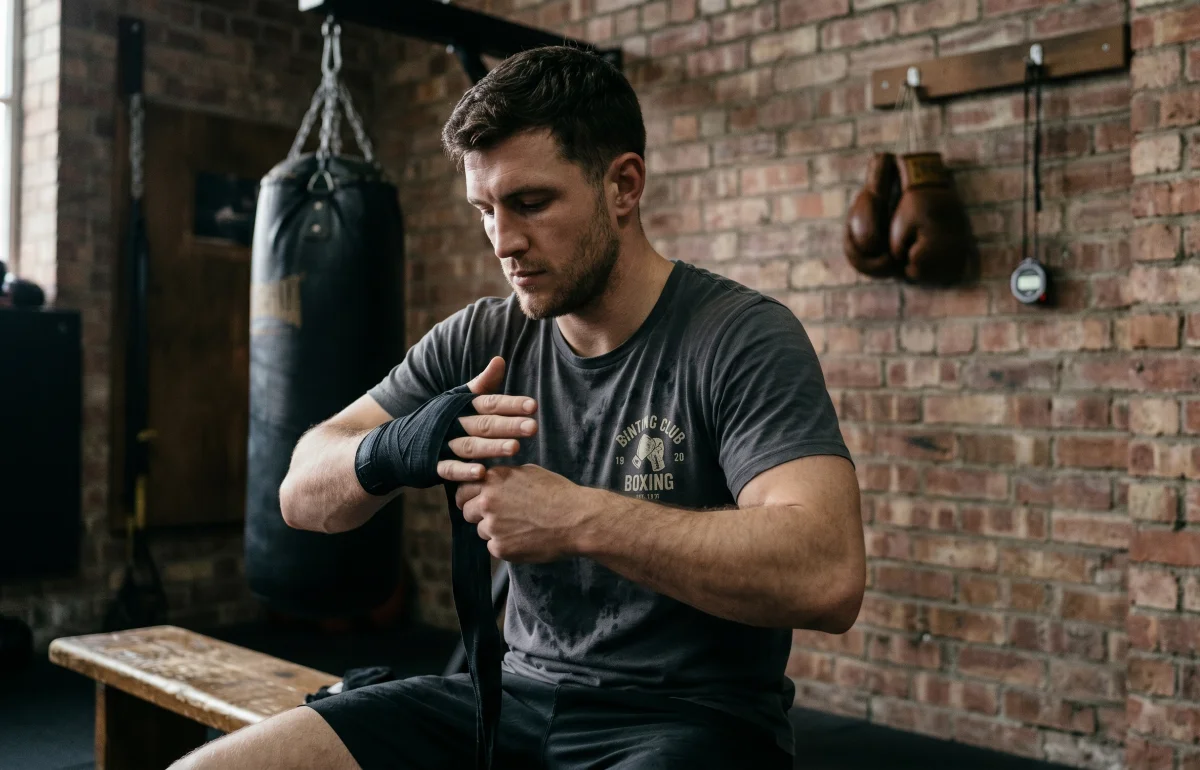
How to Wrap Hands for Heavy Bag Training
Heavy bag training is one of the best ways to build boxing power, timing, conditioning, and confidence. It is also one of the easiest ways for beginners to hurt their wrists or knuckles if they punch hard before learning how to protect their hands. That is why learning how to wrap hands for heavy bag training properly is not just a small detail. It is part of safe boxing practice.
A punching bag does not move like a person holding pads. It gives some resistance, but it also sends impact back into your hand on every shot. If your wrist is slightly bent, your glove is loose, or your knuckles are not supported, that repeated impact can become painful very quickly.
Good hand wraps help keep your wrist aligned, add structure around the knuckles, reduce friction inside the glove, and make your hand feel more compact when you punch. They do not replace good technique or quality gloves, but they make heavy bag training much safer and more comfortable.
This guide focuses specifically on wrapping your hands for a punching bag. If you want the broader beginner version first, read How to Wrap Your Hands for Boxing.
Quick Answer: What Is the Best Way to Wrap Hands for a Punching Bag?
For heavy bag training, the best hand wrap method is one that gives you firm wrist support, enough knuckle padding, and a secure fit inside the glove without cutting off circulation.
Most beginners should use 180-inch traditional or Mexican-style hand wraps. Start with the wrist, build a soft but firm pad across the knuckles, pass the wrap between the fingers for structure, then finish by reinforcing the wrist again.
Simple rule: if your wrist bends backward when you hit the bag, your wrap is not supportive enough. If your fingers go numb, it is too tight.
For light cardio boxing, quick wraps can be acceptable. For regular heavy bag rounds, traditional wraps are usually better because you can control the wrist and knuckle support more precisely.
Why Heavy Bag Training Needs Extra Hand Protection
Heavy bag work is different from shadowboxing, mitt work, and light partner drills because the impact is repetitive and predictable. You may throw hundreds of jabs, crosses, hooks, and body shots in one session. Even if each punch is not thrown at full power, the total stress builds up.
The most common problem is not one dramatic injury. It is usually small discomfort that gets worse: sore knuckles, aching wrists, irritated skin, or a sharp feeling when the punch lands slightly wrong.
Hand wraps help with this by making the hand feel like one connected unit. Instead of your small hand bones moving separately inside the glove, the wrap compresses and supports them together.
The Heavy Bag Punishes Bad Wrist Alignment
When a beginner punches the heavy bag, the wrist often bends slightly at impact. This usually happens because the punch lands with the wrong knuckles, the elbow is not aligned, or the glove is too loose around the hand.
A proper wrap gives the wrist extra structure. It will not fix bad technique completely, but it can reduce the chance of the wrist folding under impact.
The Heavy Bag Can Irritate Your Knuckles
Knuckle pain after bag work is common, especially for beginners who throw hard punches too early. Gloves provide padding, but your knuckles still need a stable base inside the glove. A few extra layers across the knuckles can make bag rounds feel much better.
Hand Wrap Options for Heavy Bag Training
| Wrap Type | Best For | Pros | Limitations |
|---|---|---|---|
| Traditional cotton wraps | General beginner training | Simple, durable, affordable | Less stretch and flexibility |
| 180-inch or Mexican-style wraps | Regular heavy bag training | Slight stretch, secure fit, strong wrist support | Can loosen slightly over time |
| 120-inch wraps | Kids or very small hands | Less bulk inside the glove | Limited support for adult bag work |
| Quick wraps | Fitness boxing and short sessions | Fast and convenient | Less custom wrist support |
| Gel inner gloves | Light bag work or classes | Easy to put on, adds knuckle padding | Usually weaker wrist support than real wraps |
If you are serious about boxing training, 180-inch wraps are the safest starting point. They are cheap, flexible, and work with most boxing gloves. Simple Mexican-style wraps from brands like Hayabusa or Sanabul are usually more than enough for most beginners.
How to Wrap Hands for Heavy Bag Training Step by Step
There are different wrapping styles, but the goal for heavy bag work is simple: protect the wrist, protect the knuckles, and keep the hand stable inside the glove.
- Put your thumb through the loop and lay the wrap flat across the back of your hand.
- Wrap around the wrist three or four times to create the base support.
- Bring the wrap across the back of the hand toward the knuckles.
- Wrap across the knuckles three or four times to create a protective pad.
- Bring the wrap back toward the wrist to lock the knuckle pad in place.
- Pass the wrap between the fingers to stop the knuckle pad from sliding.
- Return to the wrist and reinforce it again with the remaining wrap.
- Close the Velcro firmly, then make a fist to check comfort and circulation.
The wrap should feel snug when your hand is open and more supportive when you make a fist. It should not feel like your fingers are being squeezed or pulled apart.
Should You Add More Knuckle Padding for Heavy Bag Work?
Yes, many boxers prefer a little more knuckle padding for heavy bag training than for light technical work. You do not need a huge bulky pad, but a few firm layers across the knuckles can reduce irritation during longer sessions.
The key is balance. Too much padding can make your glove fit badly. Too little padding can leave your knuckles sore after hard rounds.
How Tight Should Hand Wraps Be for Heavy Bag Work?
Hand wraps should be tight enough to support the wrist and knuckles, but not so tight that they restrict blood flow. This is one of the hardest things for beginners to judge.
After wrapping, make a fist several times. Your hand should close naturally. If the wrap pulls painfully between the fingers or your fingertips start tingling, unwrap and try again with less tension.
If the wrap feels loose before you even put your glove on, it will usually shift during bag work. Loose wraps can bunch up inside the glove and become distracting or uncomfortable.
A good heavy bag wrap feels secure when punching, comfortable when resting, and stable when you rotate your wrist slightly.
Common Beginner Mistakes When Wrapping for a Punching Bag
Wrapping Too Loose
Loose wraps are almost useless for heavy bag work. They may look fine before the gloves go on, but once you start punching, the fabric moves, folds, and stops supporting the wrist properly.
Wrapping Too Tight
Some beginners go the opposite way and wrap so tightly that their hands feel numb after a round. Support should never come at the cost of circulation. If your fingers change color or tingle, the wrap is too tight.
Ignoring the Wrist
Knuckle padding is important, but wrist support is usually the bigger issue during heavy bag training. A strong punch with a bent wrist can hurt quickly, even with good gloves.
Using Gloves That Are Too Loose
If your glove has a large hand compartment, your wrapped hand may still move around inside it. That movement reduces control and can make impact feel unstable. If you are unsure about glove size, check the Boxing Gloves Size Guide.
Punching Too Hard Too Soon
Hand wraps are protection, not permission to throw every punch at full power. Beginners should build power gradually while learning alignment, distance, and balance.
Hand Wraps and Boxing Gloves Work Together
Hand wraps are only one part of the protection system. Your gloves also matter. A good heavy bag glove should have enough padding, a secure wrist closure, and a hand compartment that does not feel sloppy.
Some boxers also use lightweight gel knuckle guards underneath traditional wraps during harder heavy bag sessions for extra knuckle cushioning and impact protection.
If your gloves are old, overly soft, or collapsed around the knuckles, wraps can only help so much. Worn-out padding often makes heavy bag impact feel harsher on the hands and wrists, especially during longer sessions. This is one of the reasons many beginners underestimate how quickly boxing gloves wear down over time.
If you are unsure whether your gloves still provide enough protection, you can also read How Long Do Boxing Gloves Last?.
For regular bag work, look for gloves built for training or heavy bag use rather than thin competition gloves. You can compare options in Best Boxing Gloves for Heavy Bag Training and Best Boxing Gloves for Training.
Quick Wraps vs Traditional Wraps for Heavy Bag Training
Quick wraps are popular because they save time. You put them on like fingerless gloves, tighten the wrist strap, and start training. For fitness boxing, short sessions, or light bag work, they can be convenient. Models like RDX Gel Boxing Hand Wraps are popular among beginners because they are simple to use and require less wrapping practice.
Traditional wraps take longer, but they let you customize support. You can add more wrist layers, adjust knuckle padding, and control how the wrap sits between the fingers.
If you train once a week in a casual class, quick wraps may be enough. If you hit the heavy bag regularly or throw hard punches, traditional wraps are usually the better choice.
Signs You Should Rewrap Before Hitting the Bag
- Your wrist feels loose before the gloves go on.
- The knuckle pad slides when you make a fist.
- The wrap bunches up inside the glove.
- Your fingers feel numb or cold.
- You feel sharp pressure between the fingers.
- The Velcro closure is barely holding.
It is better to spend one extra minute rewrapping than to train through discomfort and make the session worse.
How to Keep Hand Wraps Clean After Bag Work
Heavy bag sessions make wraps sweaty quickly. If you throw damp wraps into your gym bag and leave them there, they will start smelling bad and can make your gloves worse too.
After training, unroll your wraps and let them dry. Wash them regularly, ideally inside a mesh laundry bag so they do not tangle. Clean wraps also help keep the inside of your gloves fresher. For glove care, read How to Clean Boxing Gloves.
FAQ
Can you hit a heavy bag without hand wraps?
You can, but it is not a good habit for beginners. Hand wraps help support the wrist and knuckles during repeated impact. Hitting the heavy bag without wraps increases the chance of soreness and poor wrist alignment.
Are hand wraps necessary for punching bag workouts?
For most boxing workouts, yes. Even light punching bag sessions involve repeated impact, and wraps add useful protection inside the glove.
What length hand wraps are best for heavy bag training?
Most adults should start with 180-inch wraps. They provide enough material for wrist support, knuckle coverage, and finger separation without being excessive.
Are quick wraps good enough for heavy bag work?
Quick wraps can work for light fitness boxing, but traditional wraps usually provide better support for harder or more frequent heavy bag training.
Why do my wrists hurt after hitting the heavy bag?
Common reasons include poor wrist alignment, loose wraps, weak glove support, punching too hard too soon, or landing with the wrong part of the hand.
Should hand wraps go between the fingers?
For most boxing wrap styles, yes. Passing the wrap between the fingers helps keep the knuckle padding in place and adds structure to the hand.
Can I use the same wraps for sparring and heavy bag training?
Yes, the same wraps can work for both. For heavy bag training, many boxers prefer slightly more knuckle padding and wrist reinforcement because the impact is repetitive.
Final Thoughts
Learning how to wrap hands for heavy bag training is one of the simplest ways to make boxing practice safer and more comfortable. The goal is not to create a bulky cast around your hand. The goal is to support the wrist, protect the knuckles, and keep everything stable inside the glove.
For most beginners, 180-inch traditional or Mexican-style wraps are the best starting point. Use them with properly fitted boxing gloves, keep your punches controlled, and pay attention to how your wrists and knuckles feel after each session.
If you feel pain every time you hit the bag, do not just wrap tighter and continue. Check your technique, your glove condition, and your training volume. Good wraps help, but smart training matters more.