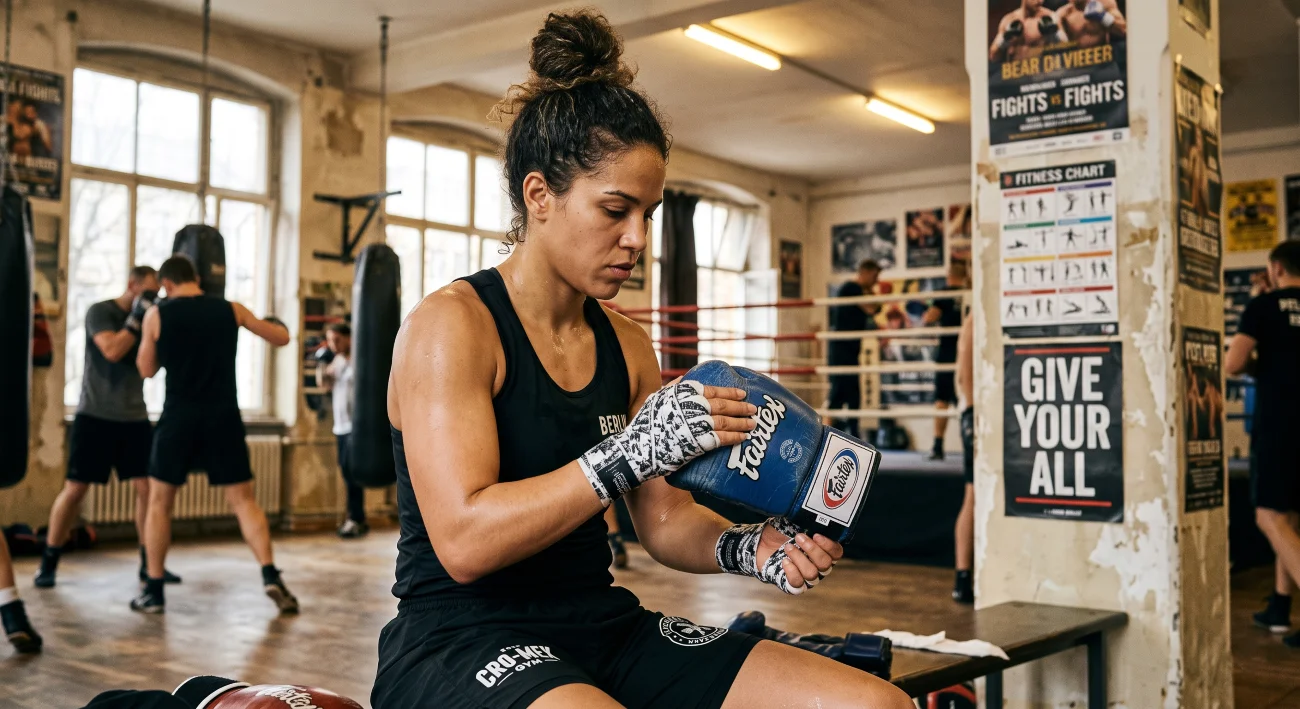
How Tight Should Boxing Gloves Fit?
Boxing gloves should feel snug, secure, and controlled — not painfully tight.
If your gloves are too loose, your hand moves inside the glove every time you punch. That can make your knuckles land badly, your wrist bend, and your grip feel unstable.
If your gloves are too tight, you may feel numb fingers, pressure on the thumb, cramped knuckles, or a hand that gets tired before the round is even over.
This is why glove fit confuses so many beginners. A boxing glove is not supposed to feel like a soft winter mitten. It should hold your hand firmly. But it also should not cut off circulation or force your fingers into a painful position.
The tricky part is that boxing gloves also change once you add hand wraps. A glove that feels perfect with bare hands may feel too tight after wrapping. A glove that feels slightly roomy at first may feel correct once the wraps fill the hand compartment.
In this guide, we will break down how tight boxing gloves should fit, how to test the fit properly, what warning signs to watch for, and when you should size up, change glove style, or look for a different hand compartment.
If you are still choosing glove weight, read our boxing gloves size guide after this article.
Quick Answer: How Tight Should Boxing Gloves Fit?
Boxing gloves should fit snugly around your hand and wrist with hand wraps on. Your fingers should reach near the top of the glove, your fist should close naturally, and your wrist should feel supported. They should not cause numbness, sharp pressure, thumb pain, or restrict blood flow.
A good boxing glove fit feels secure when you make a fist. Your hand should not slide forward, twist sideways, or float inside the glove.
At the same time, you should be able to:
- Make a natural fist
- Open your hand slightly between punches
- Wear proper hand wraps
- Keep your wrist straight
- Finish several rounds without numb fingers
Think of the fit as “firm handshake tight,” not “painfully squeezed tight.”
Not sure what glove size you actually need?
Use our Boxing Glove Size Calculator to get a recommendation based on your body weight, hand size, and training style.
Free Calculator
Boxing Glove Size Calculator
Find your ideal glove size based on body weight, hand circumference, and training type.
Open calculatorWhy Boxing Glove Fit Matters More Than Beginners Think
Many beginners buy boxing gloves based only on ounce weight, price, or brand. They check whether the glove is 12 oz, 14 oz, or 16 oz, but they forget that two gloves with the same weight can fit very differently.
One 16 oz glove can feel roomy and soft. Another 16 oz glove can feel compact, tight, and wrist-focused. One 12 oz glove can feel fine for small hands, while another can crush the thumb or leave too much space around the palm.
Fit matters because your hand position inside the glove affects:
- Knuckle alignment
- Wrist support
- Punching comfort
- Hand fatigue
- How safely you can hit the heavy bag
- How controlled your fist feels during sparring
What usually happens is simple: a beginner buys gloves that look good, starts hitting the bag, then feels wrist pain or knuckle soreness and assumes boxing is just supposed to hurt.
Some discomfort is normal when your hands are not conditioned yet. But a glove that lets your hand slide, bends your wrist, or squeezes your thumb badly is not something you should ignore.
If your glove fit problem is mainly wrist movement during bag work, a more structured training glove can help. The best boxing gloves for wrist support guide goes deeper into that topic.
For more options in this category, compare it with our guide to the best boxing gloves for training.
Snug Fit vs Too Tight: What Is the Difference?
A Snug Glove Feels Secure
A snug boxing glove should hold your hand in place. When you close your fist, your knuckles should sit behind the padding naturally. Your fingers should curl without feeling trapped, and your thumb should sit in a normal position.
The glove should feel tighter with wraps than without wraps. That is normal. Boxing gloves are meant to be worn with hand wraps, not with bare hands.
A good snug fit usually feels like this:
- Your hand fills the glove without sliding
- Your wrist feels locked in after closing the strap
- Your fingers reach close to the end, but are not jammed
- You can make a fist without fighting the glove
- The thumb does not pull awkwardly
- The glove becomes more comfortable after a short break-in period
A Too-Tight Glove Creates Pressure and Numbness
A glove is too tight if it causes pain, numbness, tingling, or sharp pressure points. This is especially important around the thumb, knuckles, and back of the hand.
Warning signs include:
- Your fingers go numb after a few minutes
- Your thumb feels pulled or twisted
- Your knuckles feel crushed before punching
- You cannot make a natural fist
- Your hand cramps during warm-up
- You need to wrap your hands too thin just to fit the glove
Do not convince yourself that all of this will disappear after break-in. Some gloves soften with use, but a bad shape for your hand usually stays a bad shape.
What Happens If Boxing Gloves Are Too Loose?
Loose gloves are just as bad as tight gloves, sometimes worse.
If your hand floats inside the glove, the glove may rotate when you punch. Your knuckles might not land behind the main padding. Your wrist can bend because the glove is not holding your hand as one unit.
Common signs your gloves are too loose:
- Your hand slides forward when you hit the bag
- Your wrist bends backward on impact
- You need to overtighten the Velcro strap to feel secure
- Your fingers feel disconnected from the glove
- The glove twists around your hand during hooks
- Your knuckles do not line up consistently with the padding
Many beginners buy gloves too large because they think bigger gloves automatically mean more protection. Bigger gloves can have more padding, but if the hand compartment is too roomy, the protection becomes less useful.
This is especially common with 16 oz gloves on people with small hands. A 16 oz glove may be correct for sparring, but the brand and hand compartment still matter.
Always Test Boxing Gloves With Hand Wraps
Never judge boxing glove fit with bare hands only.
Hand wraps change the fit dramatically. They add material around your knuckles, wrist, thumb, and back of the hand. A glove that feels roomy without wraps might feel perfect after you wrap properly.
This is why trying gloves with bare hands in a store can be misleading. You might think the glove fits well, then get home, wrap your hands, and realize the hand compartment is too tight.
When testing fit, use the same wrap style you actually train with. If you normally use 180-inch wraps, test with 180-inch wraps. If you use quick wraps or gel wraps, test with those.
If your wraps always make your gloves feel painful, the problem may not be only the glove. You may be wrapping too thick across the knuckles or too tight around the hand.
For help with that, read our guide on how to wrap your hands for boxing.
How to Test Boxing Glove Fit Properly
You can check glove fit in a few minutes if you know what to look for.
- Wrap your hands the way you normally train.
- Put the glove on and push your hand fully into the compartment.
- Close the Velcro or lace the glove as you would for training.
- Make a fist slowly and check if your fingers curl naturally.
- Press your fist lightly into your other palm or a soft surface.
- Move your wrist forward, backward, and side to side.
- Open and close your hand several times.
- Wear the glove for at least a few minutes before judging.
A glove can feel fine for ten seconds and terrible after three minutes. Give your hand enough time to notice pressure points.
The Fist Test
When you make a fist, your knuckles should feel like they sit naturally behind the padding. You should not feel your fingers fighting the glove shape.
If the glove prevents you from making a full fist, it may be too stiff, too small, or just the wrong shape for your hand.
The Wrist Test
With the glove closed, your wrist should feel supported but not trapped. Try moving your wrist slightly. If the glove flops around, it is too loose. If it locks your wrist painfully or cuts into the lower palm, it may not fit your anatomy.
The Thumb Test
Thumb comfort is underrated. A bad thumb position can ruin an otherwise good glove.
Your thumb should sit naturally, without being pulled too far outward, bent inward, or crushed against the side. If thumb pain appears immediately, do not ignore it.
Does Glove Weight Change the Fit?
Yes, but not always in the way beginners expect.
Glove weight refers to the glove’s overall ounce weight, not a normal clothing size. A 16 oz glove usually has more padding than a 12 oz glove, but the hand compartment depends on the brand and model.
Some brands make their 16 oz gloves roomy. Others keep a compact hand compartment and simply add more padding outside.
General patterns:
- 10 oz gloves often feel compact and are common for pads or lighter bag work
- 12 oz gloves can work well for bag and mitt training
- 14 oz gloves are a flexible training size for many adults
- 16 oz gloves are common for sparring and heavier training
But do not choose by ounces alone. If you have wide palms, long fingers, or thick wraps, you may need a roomier model. If you have small hands, you may need a glove known for a snug compartment.
For a deeper breakdown, use the boxing gloves size guide.
Hand Shape Matters: Small Hands, Wide Hands, and Long Fingers
Not every glove fits every hand. This is where many online glove recommendations fail.
A glove can be excellent and still wrong for you.
Small Hands
If you have small hands, a roomy glove can feel unstable. You may notice your fingers do not reach far enough into the glove or your wrist floats even after tightening the strap.
In that case, look for a compact or snug glove compartment. You can also use proper wraps to fill some space, but do not rely on oversized wraps to fix a glove that is clearly too large.
Wide Hands
If you have wide palms, narrow gloves may feel painful across the knuckles and back of the hand. This can become worse after wrapping.
A glove that is too narrow may create pressure even before you start punching. That is not the kind of “break-in” problem you want to gamble on.
Long Fingers
If your fingers feel jammed into the top of the glove, the hand compartment may be too short. This can make it hard to form a natural fist and may create fingertip pressure during long sessions.
If this sounds familiar, do not just size up blindly. Sometimes you need a different glove shape, not only a heavier ounce size.
For smaller hands specifically, see our guide to the best boxing gloves for small hands.
If you are comparing beginner-friendly models, you can also check our best boxing gloves for beginners guide.
Should New Boxing Gloves Feel Tight at First?
New boxing gloves can feel slightly tight at first. That is normal, especially with leather gloves or gloves with dense padding.
During the first few sessions, the glove may soften, the lining may relax, and the padding may start to shape around your hand.
But there is a difference between normal break-in and bad fit.
| Normal Break-In Feel | Bad Fit Warning Sign |
|---|---|
| Firm padding | Sharp knuckle pain |
| Slight tightness with wraps | Numb fingers |
| Stiff wrist at first | Thumb pulled painfully |
| Glove softens after sessions | Pressure gets worse over time |
| Needs a few rounds to feel natural | You cannot make a proper fist |
A glove should not need weeks of pain before it becomes usable. If it feels wrong immediately in a clear way, trust that signal.
Fit for Bag Work vs Sparring
Heavy Bag Gloves Should Feel Stable on Impact
For heavy bag training, fit needs to be stable because impact is repetitive. If your hand shifts inside the glove round after round, small alignment problems become bigger.
A good bag glove should keep your wrist straight and your knuckles lined up. You should not feel like the glove is collapsing around your hand every time you punch.
If you train hard on the bag several times per week, see our guide to the best boxing gloves for heavy bag.
Sparring Gloves Should Be Secure but Comfortable
For sparring, gloves are often larger, commonly 16 oz for many adults. The fit still matters. A sparring glove that is too loose can make your punches less controlled and your defense feel slower.
At the same time, sparring gloves should not crush your hand. You need to stay relaxed, catch shots, parry, and keep your hands active for multiple rounds.
If you are buying gloves mainly for sparring, read our best boxing gloves for sparring guide.
Common Beginner Mistakes With Boxing Glove Fit
Mistake 1: Buying Gloves Too Big for “More Protection”
More padding can help, but a glove that is too large inside can make your hand unstable. Protection is not only about padding thickness. It is also about alignment.
Mistake 2: Testing Gloves Without Wraps
This is probably the most common mistake. Always test gloves with wraps. Bare-hand fit tells you very little about real training fit.
Mistake 3: Ignoring Thumb Pain
Thumb position varies a lot between glove brands. If your thumb feels wrong, the glove may simply not match your hand.
Mistake 4: Overtightening the Strap
If you need to pull the Velcro as tight as possible just to stop your hand moving, the glove may be too roomy. The strap should support the wrist, not compensate for a poor hand compartment.
Mistake 5: Assuming Expensive Always Fits Better
Premium gloves can be excellent, but they still have specific shapes. A $250 glove that fits your hand badly is not better than a $90 glove that fits correctly.
When Should You Size Up or Choose a Different Glove?
You may need a different glove if the fit problem remains after normal wraps and a short break-in period.
Consider sizing up or changing models if:
- Your fingers go numb every session
- Your knuckles feel crushed with normal wraps
- Your thumb hurts immediately
- You cannot close your fist naturally
- You have wide hands and the glove feels narrow
- You need unusually thin wraps just to fit
Consider sizing down or choosing a snugger model if:
- Your hand slides inside the glove
- Your wrist floats even with the strap closed
- Your fingers do not reach close enough to the top
- The glove twists during hooks
- You feel disconnected when punching
For people who want a more protective, roomy, premium-style glove, softer training gloves can make sense. But if your main problem is a loose wrist, choose support first.
If you want to compare premium options, our Winning MS-600 vs Cleto Reyes Training Gloves comparison explains the tradeoffs clearly.
Boxing Glove Fit Checklist
Before keeping a pair of gloves, run through this checklist.
- Do they fit with your normal hand wraps?
- Can you make a full fist without forcing it?
- Do your fingers reach near the top without being jammed?
- Does the thumb feel natural?
- Does your wrist stay straight when you punch lightly?
- Does the glove stay aligned during hooks?
- Can you wear them for several minutes without numbness?
- Do they feel secure without overtightening the strap?
If the answer is mostly yes, the fit is probably good.
If you fail several of these checks, do not force it. The glove may be the wrong shape for your hand.
FAQ: How Tight Should Boxing Gloves Fit?
Should boxing gloves be tight or loose?
Boxing gloves should be snug, not loose. Your hand should not slide inside the glove, but the glove should not cause numbness, sharp pressure, or pain.
Should boxing gloves feel tight with wraps?
Yes, they should feel tighter with wraps than without wraps. That is normal. But you should still be able to make a natural fist and train without your fingers going numb.
How do I know if my boxing gloves are too small?
Your gloves may be too small if your fingers are jammed, your thumb hurts, your knuckles feel crushed, or your hand goes numb after a few minutes.
How do I know if my boxing gloves are too big?
Your gloves may be too big if your hand slides forward, the glove twists during punches, your wrist feels unsupported, or you need to overtighten the strap to feel secure.
Do boxing gloves stretch over time?
Some gloves soften and relax slightly after break-in, especially leather gloves. But they will not completely change shape. A painful glove usually does not become perfect later.
Should my fingers touch the end of boxing gloves?
Your fingers should reach near the end of the glove, but they should not be jammed tightly. You need enough room to curl your fingers into a natural fist.
Can I fix loose boxing gloves with thicker wraps?
Thicker wraps can help a slightly roomy glove, but they should not be used to fix a glove that is clearly too large. If the glove twists or your wrist floats, choose a better-fitting model.
Are 16 oz gloves supposed to feel roomy?
Some 16 oz gloves feel roomier because they have more padding, but the hand compartment depends on the brand. A 16 oz glove should still hold your hand securely with wraps.
Final Answer: The Right Boxing Glove Fit
Boxing gloves should fit snugly enough to keep your hand stable, but not so tight that they cause pain, numbness, or awkward hand position.
The best fit feels secure with hand wraps on. Your fist closes naturally, your wrist feels supported, your thumb sits comfortably, and your hand does not slide around when you punch.
If your gloves feel slightly firm at first, that can be normal. If they hurt immediately, cut off circulation, or force your hand into a bad shape, they are probably wrong for you.
Many beginners blame their hands, their wraps, or their technique when the real issue is simply poor glove fit. Choose gloves for your hand shape, training style, and comfort — not only for brand name or ounce weight.
Related Articles and Reviews
Check it now