In the world of boxing, your power starts from the ground up. While beginners often obsess over the weight of their gloves or the brand of their headgear, they frequently overlook the most critical piece of equipment for mobility: boxing shoes. Training in running shoes is like trying to race a Ferrari on tractor tires—the grip, weight, and support are simply wrong for the task at hand.
If you are serious about moving like a fighter, pivoting with precision, and staying balanced during heavy exchanges, you need dedicated boxing boots. This 2026 guide covers every technical aspect of footwear to ensure your first purchase is your best one.
The Science of Footwork: Why Running Shoes Fail
To understand why you need boxing-specific footwear, we have to look at the physics of a punch. A cross or a hook isn't just an arm movement; it’s a kinetic chain that starts with your foot driving into the canvas.
- Energy Transfer: Running shoes feature thick EVA foam midsoles designed to absorb impact. In boxing, you want the opposite. You need a thin, hard sole that transfers energy directly from the floor to your hips.
- Lateral Stability: Running is a linear sport (forward motion). Boxing is multi-directional. Standard sneakers lack the reinforced sidewalls needed to prevent your foot from "rolling" over the edge of the sole during a hard lateral step.
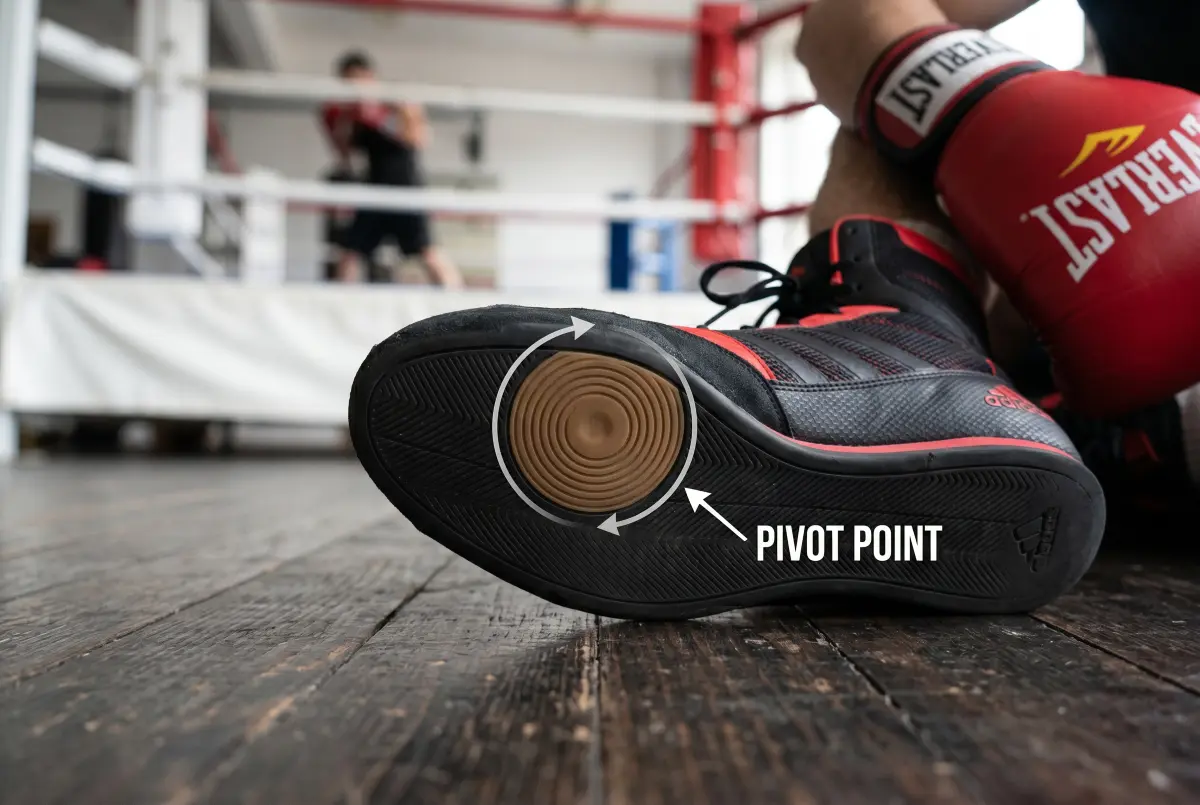
- The Pivot Point: Boxing boots have a specific tread pattern—often a smooth circle or "swirl" under the ball of the foot. This allows you to spin 90 or 180 degrees instantly without the rubber "catching" and straining your knee.
Anatomy of a Boxing Boot
When shopping, look for these four structural components:
The Outsole (The Grip)
Most professional boots use a gum-rubber outsole. It’s sticky enough to prevent sliding on a sweaty canvas but smooth enough to allow for pivoting. Check the edges: high-quality boots have the sole wrapped slightly up the sides of the shoe for extra grip during wide-stance movements.
The Upper (The Breathability)
Typically made of a mix of synthetic mesh and leather. Mesh is lighter and dries faster (crucial for hygiene), while leather or suede provides more "lockdown" and lasts longer. For beginners, a mesh-dominant upper is usually better due to the lower price point and immediate comfort.
The Insole (The Support)
Unlike sneakers, boxing innersoles are very flat. If you have high arches, you might feel some discomfort initially. However, avoid adding thick orthopedic insoles, as they raise your center of gravity and make you less stable.
Low, Mid, or High: Which Height is for You?
| Height Type | Pros | Cons | Who it's for |
|---|---|---|---|
| Low-Top | Maximum ankle range of motion, lightest weight. | Zero ankle support against rolls. | Speed-based fighters, defensive specialists. |
| Mid-Top | Perfect balance of support and mobility. | Can feel restrictive to some. | 90% of all beginners and pros. |
| High-Top | Elite ankle protection, classic aesthetic. | Takes longer to lace up, can feel hot. | Boxers with weak ankles or heavy hitters. |
The "Second Skin" Rule: Finding Your Size
A boxing shoe should fit tighter than your casual shoes. If there is any "play" or sliding inside the boot, you will lose power and likely end up with painful blisters on your big toe.
"When you lace up, the boot should feel like an extension of your leg. You want a snug fit around the midfoot, but enough room in the toe box so your toes aren't curled."
Sizing Tips:
- Adidas: Usually true to size but narrow.
- Nike: Tend to run small; many boxers go half a size up.
- Rival: Known for wider toe boxes, great for "non-athlete" foot shapes.
How to Make Your Boots Last
Boxing shoes are specialized equipment. If you treat them like everyday sneakers, they will fall apart in months. Follow these rules:
- Indoor Only: Never wear your boots on the street. Concrete acts like sandpaper on gum-rubber soles. Put them on after you enter the gym.
- Air Dry: Like gloves, shoes trap moisture. Unlace them fully after training and pull the tongue forward to let them breathe.
- Anti-Odor: Use cedar wood inserts or specialized sneaker balls to prevent the dreaded "gym foot" smell.
Frequently Asked Questions
Do I need boxing shoes for a boxercise class?
If the class is 100% on the heavy bag and no sparring or pivoting is involved, cross-trainers are fine. But if you are learning real technique, even a budget pair of boxing boots will drastically improve your experience.
Should I buy expensive boots right away?
No. For your first pair, look at the $60-$90 range (e.g., Adidas Box Hog). They are excellent performers. Save the $200+ elite boots for when you start competing.
Why do some pros wear high-top boots?
Mainly for support and tradition. High-tops keep the ankles warm and compressed, which can help prevent injuries during a 12-round fight where fatigue makes your movement sloppy.
Related Articles and Reviews
Check it now