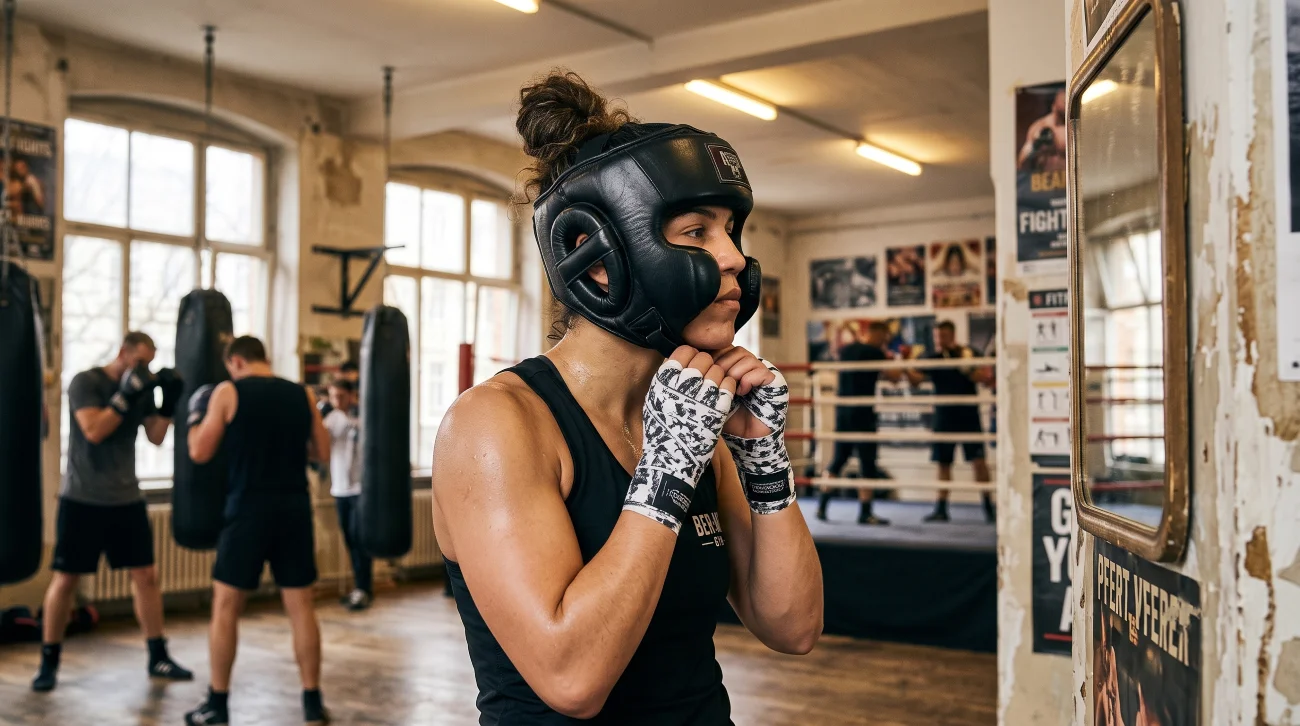
How to Choose Boxing Headgear
Choosing boxing headgear looks simple until you actually try to buy one.
Every model promises protection, but the designs can be completely different. Some cover the cheeks, some add a face bar, some feel light and open, and others feel like a padded helmet that moves every time you get touched.
For beginners, the biggest mistake is usually choosing the most padded-looking option without thinking about fit, visibility, or the type of sparring they will do.
Good boxing headgear should stay in place, protect the areas it is designed to cover, and still let you see punches coming. If it blocks your peripheral vision or slides over your eyes, the extra padding is not helping much.
This guide explains how to choose boxing headgear based on fit, protection style, visibility, comfort, training level, and budget. It also covers the practical details that matter after several rounds: heat, pressure points, chin straps, cheek padding, and whether you can adjust the headguard without stopping every minute.
For specific models, see our guide to the best boxing headgear for sparring.
Quick Answer: What Boxing Headgear Should You Choose?
For most beginner and intermediate boxers, cheek-protector headgear with a secure adjustable fit is the best all-around choice. It offers useful facial coverage without the restricted vision and bulk of many full-face designs. Choose a face-bar model mainly when nose protection is a specific priority, and choose open-face competition-style headgear when visibility and low weight matter more than facial coverage.
Before buying, check four things:
- The headgear fits your actual head circumference.
- It does not rotate when pushed from the side.
- The cheek pads do not block your lower or peripheral vision.
- The chin strap secures the headgear without pressing into your throat.
The best headgear is not automatically the thickest or most expensive model. It is the one that fits securely enough that you can forget about it while sparring.
What Boxing Headgear Can and Cannot Do
Boxing headgear is useful, but beginners sometimes expect too much from it.
Its most practical role is helping reduce cuts, scrapes, bruising, and direct contact with areas such as the forehead, cheeks, and ears. Depending on the design, it may also provide more protection around the nose and mouth.
What it does not do is make hard sparring harmless. Your head still moves when it is hit. A padded headguard is not permission to spar recklessly or let a partner throw at full power.
Good defense, controlled intensity, suitable gloves, responsible partners, and coaching matter more than simply buying thicker equipment.
Practical rule: use headgear to make controlled sparring more manageable, not to turn every session into a fight.
Types of Boxing Headgear
The first decision is not the brand. It is the protection style.
Open-Face Headgear
Open-face headgear leaves most of the face exposed. It usually protects the forehead, temples, ears, sides, and back of the head while keeping vision as open as possible.
This style feels light and natural. It is useful for technical work, competition-style preparation, and boxers who hate bulky equipment.
The tradeoff is obvious: the nose, cheeks, and mouth receive less coverage. A beginner who is still reacting late to punches may prefer more facial protection.
Cheek-Protector Headgear
Cheek-protector headgear is the most balanced option for regular gym sparring.
Raised pads cover part of the cheeks and help shield the sides of the face while leaving the center open. Compared with a full face bar, it usually offers better airflow, lower weight, and a more natural field of view.
This is the style that makes sense for most recreational, beginner, and intermediate boxers. The main thing to check is whether the cheek pads sit too high. Poorly shaped pads can block hooks and uppercuts from your peripheral vision.
Face-Bar or Nose-Bar Headgear
Face-bar headgear places a padded bar in front of the nose and upper face.
It is a practical choice for boxers who specifically want more nose protection, are returning after a facial injury with medical and coaching clearance, or simply want less direct contact with the center of the face.
The disadvantages are bulk, heat, price, and a different sense of distance. Some bars sit close enough to make breathing feel enclosed, while others project farther forward and can make punches seem closer than they are.
Do not buy a face-bar model only because it looks like the most protective option. Buy it because its extra coverage solves a real problem for you.
Full-Face Headgear With Chin Coverage
Some headguards extend padding around the cheeks, chin, and lower face.
They can feel reassuring for new boxers, but they are often hotter and more restrictive. Extra material may also create a larger target and make the headgear shift when punches catch the padding.
This style can work for light beginner sparring, but fit quality becomes especially important.
Boxing Headgear Type Comparison
| Headgear Type | Visibility | Facial Coverage | Bulk | Best For |
|---|---|---|---|---|
| Open face | Excellent | Low | Low | Technical sparring, competition-style preparation |
| Cheek protector | Good to very good | Moderate | Moderate | Most regular boxing sparring |
| Face bar | Moderate | High around nose and front | High | Boxers prioritizing nose protection |
| Full face/chin | Moderate | High | High | Light sparring and extra facial coverage |
How Boxing Headgear Should Fit
Fit matters more than padding thickness.
A correctly fitted headguard should feel snug around the head without creating sharp pressure points. It should not rotate easily, slide down over the eyebrows, or lift when the chin strap is tightened.
Measure Your Head First
Use a soft measuring tape around the widest part of your head, usually just above the eyebrows and ears. Keep the tape level and compare the measurement with the specific manufacturer’s size chart.
Do not assume you wear a medium because you usually wear medium hats. Boxing brands use different sizing ranges, and the shape of the headguard matters as much as the label.
Check for Rotation
Once the headgear is adjusted, hold the sides and gently try to rotate it.
A little movement is normal. Easy rotation is not.
What usually happens with loose headgear is that a jab turns it slightly, the cheek pad moves into the line of sight, and the boxer spends the next exchange trying to see or readjust it.
Check the Forehead Position
The front padding should protect the forehead without sitting so low that it covers the eyebrows or pushes toward the eyes.
If tightening the top or rear adjustment pulls the headgear downward, the size or shape may be wrong.
Check the Chin Strap
The chin strap should keep the headguard from lifting, but it should not press into the throat.
You should be able to open your mouth, breathe, and speak normally. A strap that feels acceptable for thirty seconds may become irritating after three rounds, so move your jaw and turn your head before deciding the fit is good.
Visibility Is a Protection Feature
Many beginners judge headgear only by how much foam it has. Experienced boxers also judge how much they can see.
You need to see straight punches, hooks, body shots, and movement from both sides. If thick cheek pads create blind spots, you may absorb more punches simply because you react late.
To test visibility, put the headgear on and look forward without turning your head. Raise your hands into your normal guard. Ask someone to move a glove slowly from the front toward each side.
Pay attention to where the glove disappears. If it vanishes too early behind the cheek padding, try a different model or size.
The ideal balance is enough padding to cover vulnerable areas without making you feel as though you are looking through a narrow window.
Choose an Adjustment System You Can Use Properly
Boxing headgear commonly uses rear laces, hook-and-loop straps, buckles, top laces, or a combination of these.
Lace-Up Adjustment
Laces allow precise tension and can create a very secure fit. They are common on traditional and premium headgear.
The downside is convenience. You may need a coach or training partner to tighten the rear laces correctly.
Hook-and-Loop Adjustment
Hook-and-loop systems are faster and easier to adjust alone. They make sense for regular gym users who put on and remove headgear frequently.
The quality of the system matters. A wide, well-positioned strap can feel stable, while a narrow strap may loosen or pull unevenly.
Top Adjustment
The top adjustment controls how high or low the headgear sits.
Beginners often tighten only the rear strap and ignore the top. Then the headguard slides down, and they assume the size is wrong. Set the height first, then secure the rear and chin adjustments.
Choose Headgear That Matches Your Sparring Style
Not every boxer needs the same type of headgear. The best choice depends on how often you spar, your experience level, and what kind of protection you actually need.
If you're just starting out or only spar occasionally, comfort, visibility, and a secure fit are usually more important than maximum facial coverage. A headguard that stays in place and lets you see punches clearly will help you build confidence and good defensive habits.
For many beginners, a lightweight cheek-protector design offers the best balance between protection and natural movement.
If you want to compare more beginner-friendly and premium options, see our guide to the best boxing headgear for sparring.
As your sparring becomes more frequent, you'll likely appreciate a headguard with a more refined fit and a closure system that stays secure through multiple rounds without constant adjustment.
Comfort, Heat, and Materials
Headgear that feels comfortable in a product photo may feel completely different after several rounds.
Pressure Points
Pay attention to the forehead, temples, ears, and jaw.
A snug fit is good. A sharp pressure point is not. Foam may soften slightly with use, but a headguard that causes pain immediately is unlikely to become a perfect fit later.
Ear Openings
The ear openings should line up with your ears. Misaligned openings can press against the cartilage and become painful during movement or contact.
Protective rings around the ears should feel firm enough to keep their shape without digging into the side of the head.
Heat and Ventilation
More coverage usually means more heat.
Full-face and face-bar designs can become uncomfortable during long sessions, especially in warm gyms. Open-face and compact cheek styles generally breathe better.
If you already overheat easily, do not ignore this. A headguard that feels unbearable after two rounds will spend more time in your gym bag than on your head.
Leather vs Synthetic Materials
Leather headgear often feels durable and traditional, but high-quality synthetic materials can also perform well and may be easier to maintain.
Construction quality matters more than the material name alone. Look at stitching, strap attachment points, lining, edge finishing, and whether the padding keeps its shape.
Common Mistakes When Buying Boxing Headgear
Choosing Maximum Coverage Without Testing Visibility
More coverage can be useful, but only when you can still see clearly. Do not discover during sparring that the cheek pads hide hooks.
Buying One Size Too Large for Comfort
Loose headgear may feel comfortable in the store because there is no pressure. Once punches start touching it, the headguard rotates and becomes a distraction.
Overtightening a Wrong-Shaped Headguard
Straps cannot fix every fit problem. If the shell shape does not match your head, tightening it harder often creates pressure points without improving stability.
Ignoring the Gym’s Rules
Some gyms prefer specific headgear styles or do not allow certain face bars during regular sparring. Ask your coach before spending money.
Assuming Headgear Means You Can Spar Harder
This is the most important mistake to avoid. Equipment should support controlled practice, not encourage unnecessary damage.
How Much Should You Spend on Boxing Headgear?
Beginners do not need the most expensive headgear available, but the cheapest generic option can create fit and durability problems.
A practical way to think about budget is:
- Occasional technical sparring: prioritize correct fit and clear vision over premium materials.
- Regular weekly sparring: spend more for stable adjustment, comfortable lining, and padding that keeps its shape.
- Specific facial protection needs: expect face-bar models to cost more and take extra time to fit correctly.
- Competition preparation: ask your coach which style best matches your rules and training goals.
Price should come after fit and use case. An expensive headguard that blocks your vision is still the wrong headguard.
Best Boxing Headgear by Situation
For Beginners
Choose cheek-protector headgear with easy adjustment, moderate coverage, and good visibility. Avoid extremely bulky designs unless there is a specific reason to use them.
For Regular Sparring
Prioritize stability, comfort over several rounds, peripheral vision, and padding that does not shift. A secure cheek-style model is usually the most versatile choice.
For Nose Protection
Consider face-bar headgear, but test breathing, distance perception, and visibility before committing to it.
For Technical and Light Sparring
A lighter open-face model may feel more natural and make it easier to work on defense and reactions.
For Boxers Who Hate Loose Gear
Look for multiple adjustment points and a shape that matches your head rather than simply choosing more straps.
A Secure Fit Matters More Than Extra Padding
One of the biggest differences between budget and premium headgear is not necessarily the amount of padding—it's how securely the headguard stays in place once sparring begins.
Even a well-padded headguard becomes frustrating if it rotates after every jab or slides down into your field of vision. A secure fit lets you stay focused on technique instead of constantly readjusting your equipment.
If stability is one of your top priorities, look for a model with multiple adjustment points and a closure system that keeps the headgear locked in throughout the session.
For a broader comparison of secure-fitting, beginner-friendly, and premium models, check out our guide to the best boxing headgear for sparring.
How to Test Boxing Headgear Before Sparring
- Set the top adjustment so the forehead padding sits above the eyebrows.
- Tighten the rear adjustment until the headgear feels snug but not painful.
- Secure the chin strap and check that you can open your mouth comfortably.
- Move your head quickly left, right, up, and down.
- Raise your normal boxing guard and check peripheral vision.
- Have a partner gently push the headgear from the front and sides.
- Shadowbox for two or three minutes and notice heat, movement, and pressure points.
A headguard that fails this simple test will usually become worse once sweat and contact are added.
How to Make Boxing Headgear Last Longer
Sweat and poor storage can ruin otherwise good headgear.
- Wipe the inside and outside after every session.
- Let it air-dry fully before closing it inside a gym bag.
- Do not place it directly on a radiator or use extreme heat.
- Check straps, laces, stitching, and ear padding regularly.
- Do not share headgear unless it can be cleaned properly.
If the padding becomes permanently compressed, the straps no longer hold tension, or the headguard shifts despite correct adjustment, it may be time to replace it.
Frequently Asked Questions
What type of boxing headgear is best for beginners?
Cheek-protector headgear is usually the best starting point. It provides useful facial coverage while keeping better visibility and lower bulk than many full-face designs.
Should boxing headgear feel tight?
It should feel snug and stable, not painfully tight. It should resist rotation without creating sharp pressure around the forehead, temples, ears, or jaw.
Is full-face boxing headgear better?
It offers more facial coverage, but it is not automatically better. Full-face models are often heavier, hotter, and more restrictive. The right choice depends on whether extra nose and face protection is worth those tradeoffs for you.
Does boxing headgear protect your nose?
Cheek-style headgear offers limited nose protection. A face-bar design provides more direct coverage around the nose, although no headgear makes the face completely immune to impact.
Can boxing headgear prevent concussions?
Headgear should not be treated as concussion-proof protection. Its clearest practical benefits are reducing cuts, abrasions, and some direct facial contact. Controlled sparring, defense, coaching, and appropriate intensity remain essential.
How do I know if my headgear is too big?
It is probably too big if it rotates easily, slides toward your eyes, lifts when you move, or requires extreme strap tension to stay in place.
Can I use MMA or Muay Thai headgear for boxing?
Sometimes, but the fit and design must still support boxing visibility and movement. Combat-sports headgear can work across disciplines, although bulky chin or cheek protection may feel different during boxing-only sparring.
How often should boxing headgear be replaced?
There is no universal schedule. Replace it when the padding stays compressed, the shell or stitching is damaged, the lining cannot be kept hygienic, or the adjustment system no longer holds a stable fit.
Final Recommendation
For most boxers, the safest buying decision is not the biggest headguard. It is a well-fitted cheek-protector model with good visibility and enough adjustment to stay stable.
Choose open-face headgear when low weight and vision matter most. Choose a face-bar model when protecting the nose is a specific priority and you accept more bulk. Avoid any model that slides, blocks punches from view, or becomes painful after a few minutes.
Most importantly, remember that headgear supports smart sparring; it does not replace it. Use controlled rounds, appropriate gloves, responsible partners, and coaching alongside properly fitted equipment.
To compare current options by protection style and budget, see our full review of the best boxing headgear for sparring.
Related Articles and Reviews
Check it now