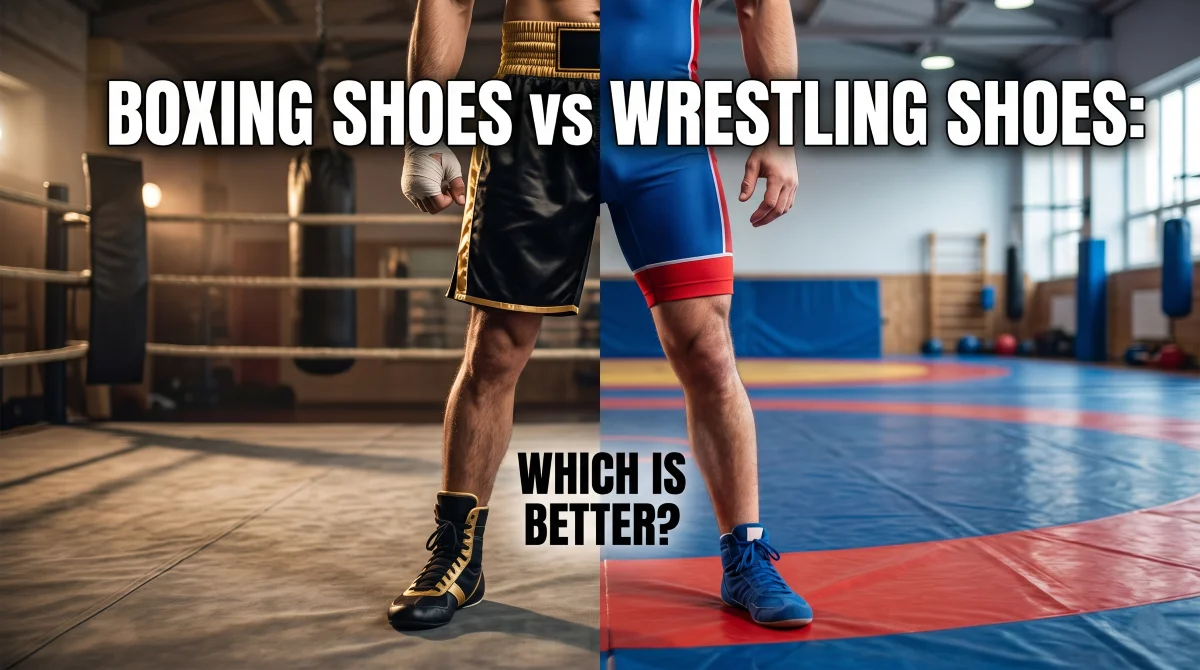
Boxing Shoes vs Wrestling Shoes
If you are new to boxing, one of the first confusing gear questions is surprisingly simple:
Should you buy boxing shoes or wrestling shoes?
At first glance, they look almost identical. Both are lightweight, high-top athletic shoes designed for combat sports. Both prioritize grip, ankle support, and movement. And if you walk into many beginner boxing gyms, you will absolutely see people training in wrestling shoes.
So why do experienced boxers almost always switch to proper boxing shoes eventually?
The answer comes down to movement mechanics, traction, pivoting, cushioning, and the way boxing footwork works compared to wrestling.
A wrestler wants explosive level changes, mat control, and forward pressure. A boxer needs smooth pivots, fast directional movement, balanced weight transfer, and the ability to stay light on the feet for rounds at a time.
Those differences matter more than most beginners realize.
In this guide, we will break down the real-world differences between boxing shoes and wrestling shoes, explain when wrestling shoes can work for boxing, and help you decide which option makes the most sense for your training and budget.
If you are still building your full boxing setup, you may also want to read our guide to choosing boxing shoes.
Quick Answer: Can You Use Wrestling Shoes for Boxing?
Yes — you can box in wrestling shoes.
In fact, many beginners do exactly that.
Wrestling shoes are lightweight, flexible, and provide good ankle support. For bag work, shadowboxing, and beginner-level training, they can work reasonably well.
However, they are not specifically designed for boxing movement.
- More aggressive grip
- Less smooth pivoting
- Different sole patterns
- Less optimized footwork support
- Different weight distribution
That means wrestling shoes may feel “sticky” during pivots and lateral movement. Over time, this can affect footwork efficiency and even increase knee stress during hard rotational movement.
For casual fitness boxing or beginners on a budget, wrestling shoes are often acceptable.
For serious boxing training, sparring, amateur competition, or advanced footwork development, real boxing shoes are usually the better choice.
Boxing Shoes vs Wrestling Shoes Comparison Table
| Feature | Boxing Shoes | Wrestling Shoes |
|---|---|---|
| Sole Design | Thin, smooth, pivot-friendly | Grippy and mat-focused |
| Grip | Balanced traction | Aggressive traction |
| Pivoting Ability | Excellent | Moderate |
| Ankle Support | Moderate to high | High |
| Weight | Very lightweight | Lightweight |
| Cushioning | Minimal to moderate | Minimal |
| Footwork Support | Optimized for boxing movement | Optimized for grappling |
| Durability | Good for gym floors/ring canvas | Good for mats |
| Best Use Case | Boxing training & competition | Wrestling & crossover training |
| Average Price | $80–$200+ | $50–$140 |
| Competition Use | Standard in boxing | Rare in boxing |
| Lateral Movement | Smooth and fluid | Sometimes too sticky |
Sole and Traction Differences
Why Boxing Shoes Have Different Soles
The biggest difference between boxing shoes and wrestling shoes is the sole.
Boxing shoes are built around movement efficiency.
A boxer constantly:
- Pivots
- Slides
- Angles out
- Rotates hips
- Transfers weight
- Circles opponents
Because of that, boxing shoes use soles designed to provide controlled traction rather than maximum grip.
Too much grip can actually become a problem in boxing.
If your foot sticks to the floor during a pivot while your upper body rotates, the torque transfers into your knees and ankles instead.
That is one reason experienced fighters care so much about footwear.
Wrestling Shoes Prioritize Grip
Wrestling is different.
Wrestlers need:
- Explosive drives
- Strong mat contact
- Sudden directional force
- Stability during clinches and takedowns
So wrestling shoes are intentionally grippier.
On wrestling mats, this works perfectly.
Inside a boxing gym, though, especially on ring canvas or smooth gym floors, wrestling shoes can sometimes feel overly sticky during pivots.
Beginners may not notice immediately.
Advanced boxers usually do.
Movement and Footwork
Boxing Footwork Is More Specialized
Good boxing starts from the feet.
A lot of beginners focus only on punching, but experienced coaches constantly emphasize positioning, balance, and movement.
That is where boxing shoes really separate themselves.
Boxing shoes are specifically engineered to help fighters:
- Stay light on their toes
- Shift weight smoothly
- Move in and out quickly
- Pivot naturally
- Maintain balance while punching
The soles are often thinner and more flexible in ways that support boxing mechanics.
Wrestling Shoes Can Feel “Flat”
Wrestling shoes often feel flatter and more planted.
That planted feeling is excellent for wrestling scrambles and pressure.
But in boxing, some fighters feel slower during:
- Circular movement
- Angles
- Rapid pivots
- Bounce-heavy footwork
This becomes especially noticeable during sparring.
A beginner hitting a heavy bag may not care much.
Someone working advanced movement drills usually will.
Ankle Support Differences
Both Shoes Offer Good Support
One reason people compare boxing shoes and wrestling shoes so often is because both are high-top combat sports shoes.
Compared to regular running shoes, both provide:
- Better ankle stability
- Better movement control
- Less excess cushioning
- Better floor feel
That alone makes either option safer for boxing than standard gym sneakers.
Wrestling Shoes Often Feel More Secure
Many wrestling shoes wrap tightly around the ankle and lower calf.
Some beginners actually prefer this because it feels stable and supportive.
However, boxing shoes are designed to balance:
- Support
- Mobility
- Flexibility
Too much rigidity can interfere with fluid boxing movement.
That is why many elite boxing shoes feel surprisingly minimal once you wear them.
Comfort and Cushioning
Boxing Shoes Usually Feel More Responsive
Most boxing shoes have relatively thin soles.
That is intentional.
Boxers want:
- Ground feedback
- Faster reactions
- Better balance
- Efficient weight transfer
Heavy cushioning can reduce responsiveness.
This is very different from running shoes, where impact absorption is the priority.
Wrestling Shoes Are Also Minimalist
Wrestling shoes are similarly minimalist.
Neither option provides huge cushioning.
If you are coming from regular athletic sneakers, both may initially feel thin.
This is a common beginner mistake: people assume more cushioning equals better performance. In boxing, too much cushioning can actually make movement less stable.
Durability
Boxing Shoes Are Built for Ring Movement
Good boxing shoes are designed for:
- Canvas surfaces
- Boxing gym floors
- Lateral movement
- Repetitive pivots
Higher-end boxing shoes can last a long time if used only inside the gym.
However, many lightweight boxing shoes wear down quickly if used outdoors.
That is why experienced fighters usually never wear boxing shoes outside.
Wrestling Shoes Handle Abuse Well
Wrestling shoes are often extremely durable for their weight.
They are built to survive:
- Abrasion
- Pressure
- Aggressive mat contact
For beginners training several times per week, wrestling shoes can sometimes last longer than cheap boxing shoes.
But durability alone should not determine your choice.
Movement quality matters more.
Training vs Competition Use
Wrestling Shoes Are Fine for Basic Training
For:
- Fitness boxing
- Heavy bag sessions
- Beginner classes
- Cardio boxing
- Light technical work
Wrestling shoes can absolutely work.
If your budget is limited, they are far better than bulky running shoes.
Many beginners start this way.
Boxing Shoes Become More Important Over Time
Once training becomes more serious, boxing shoes become increasingly valuable.
Especially during:
- Sparring
- Technical drills
- Amateur competition
- Advanced footwork practice
- High-volume boxing training
You start noticing:
- Faster pivots
- Cleaner movement
- Better balance
- Reduced foot fatigue
- More natural positioning
That is why most experienced boxers eventually switch.
Boxing Shoes Pros and Cons
Pros
- Designed specifically for boxing movement
- Better pivoting ability
- Lightweight and responsive
- Optimized for sparring and ring work
- Better long-term footwork development
- Preferred for amateur and professional boxing
Cons
- Usually more expensive
- Less versatile outside boxing
- Some models lack cushioning
- Lightweight soles can wear faster
- Not ideal for outdoor use
Wrestling Shoes Pros and Cons
Pros
- Often cheaper
- Widely available
- Strong ankle support
- Durable construction
- Good for beginner training
- Lightweight and flexible
Cons
- Grip may feel too aggressive for boxing
- Pivoting can feel less natural
- Not optimized for boxing footwork
- Rarely used in competitive boxing
- May increase rotational stress during pivots
Best Choice by Situation
Best for Beginners
If you are completely new to boxing, wrestling shoes are acceptable, but boxing shoes are ideal if budget allows. Many beginners start with lightweight options like the Adidas Box Hog 4 because they offer real boxing-specific movement without being overly expensive.
The most important thing is avoiding bulky running shoes.
Best for Budget Users
Wrestling shoes can be a smart budget option early on, especially if you train casually, are unsure how serious you will get, or mainly do bag work and fitness boxing. Budget-friendly wrestling shoes like the ASICS Matflex 7 are popular among beginners who mainly train casually or do fitness boxing.
Best for Amateur Boxing
Real boxing shoes are the better choice. At this level, footwork matters more, sparring intensity increases, and movement efficiency becomes important. Advanced amateur boxers often prefer premium models like the Venum Elite Boxing Shoes because they balance lightweight movement, grip, and ankle support for sparring and technical training.
Best for Heavy Training
For multiple weekly sessions, sparring, and advanced drills, boxing shoes are strongly recommended. For heavy weekly training and regular sparring, supportive models like the Everlast Elite High Top can feel more stable and durable over time.
Best for Casual Fitness Boxing
Either can work. If your workouts mostly involve cardio boxing, fitness classes, heavy bag circuits, or light technical work, wrestling shoes may be perfectly sufficient. Casual fitness boxers often choose comfortable all-around options like the Ringside Undefeated for cardio boxing and light gym sessions.
FAQ
Can you box in wrestling shoes?
Yes. Many beginners use wrestling shoes for boxing training. They are lightweight and supportive, but they are not specifically designed for boxing footwork and pivoting.
Are wrestling shoes good for boxing training?
They can work well for beginner boxing, heavy bag work, and fitness classes. However, dedicated boxing shoes usually perform better for sparring and advanced movement.
Why do boxing shoes have thin soles?
Thin soles improve balance, ground feel, weight transfer, and movement responsiveness. Boxers need efficient footwork more than heavy cushioning.
Do professional boxers use wrestling shoes?
Very rarely. Most professional boxers wear specialized boxing shoes because they are optimized for ring movement and pivot mechanics.
Are boxing shoes worth it for beginners?
If you plan to train consistently, yes. Good boxing shoes improve movement quality and help develop proper footwork habits earlier.
Final Recommendation
If you are just starting boxing and already own wrestling shoes, you probably do not need to rush out and buy boxing shoes immediately.
Wrestling shoes are absolutely usable for beginner training.
But if you plan to spar regularly, compete, improve footwork, train multiple times per week, or take boxing seriously long term, then real boxing shoes are worth the investment.
The difference becomes more noticeable as your movement improves.
For most casual beginners, wrestling shoes are “good enough.” For serious boxing, boxing shoes are the better tool for the job.
If you are building your full setup, these guides may also help:
Related Articles and Reviews
Check it now