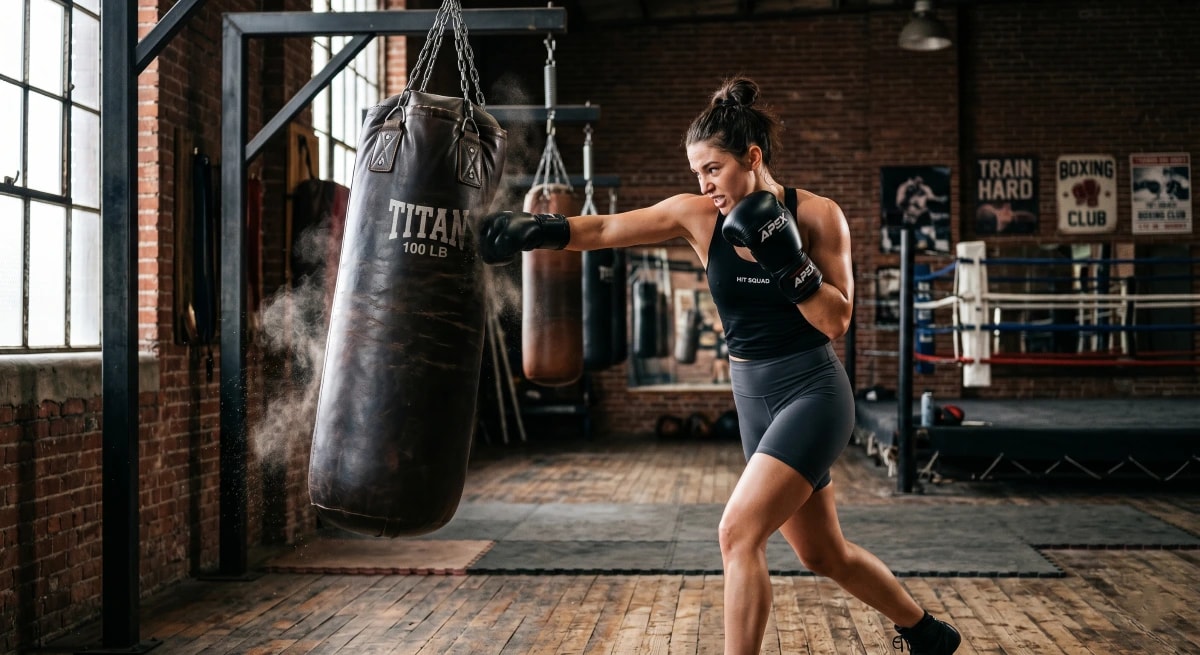
How to Hit a Heavy Bag Properly
Hitting a heavy bag looks simple until you try to do it for real.
Many beginners walk up to the bag, throw hard punches, gas out quickly, and let the bag control the session. That is usually not a conditioning problem at first. It is a technique problem.
Learning how to hit a heavy bag properly is not about smashing the bag as hard as possible. It is about stance, distance, balance, breathing, punch mechanics, rhythm, and knowing when to reset.
If you are new to boxing, this guide will keep things practical. We will cover what beginners actually struggle with: standing too close, pushing punches, loading up too much, forgetting defense, letting the bag swing wildly, and hitting without proper hand protection.
Before you start doing regular bag work, make sure your basic gear is not working against you. Good gloves matter for heavy bag training, so you may want to compare our guide to the best boxing gloves for heavy bag work. If you are not sure whether you need bag gloves or regular boxing gloves, read bag gloves vs boxing gloves before buying anything.
Quick Answer: What Is the Proper Way to Hit a Heavy Bag?
To hit a heavy bag properly, stand in a balanced boxing stance, keep your hands up, punch through the center of the bag without overreaching, rotate your hips and shoulders, breathe sharply on each punch, and reset after every combination.
You should not chase the bag, push it, or throw every punch at full power. A good beginner heavy bag round should include:
- Controlled stance and balance
- Clean straight punches before power shots
- Short combinations instead of random punching
- Footwork after punching
- Hands returning to guard
- Breathing on every punch
- Enough power to land with snap, not enough to lose form
If this sounds familiar — you hit hard for twenty seconds, gas out, and then your punches fall apart — slow down. The heavy bag is not just a strength test. It is a tool for practicing boxing mechanics under fatigue.
Set Up Before You Start Hitting the Bag
A lot of heavy bag mistakes happen before the first punch.
Beginners often put on gloves, walk straight toward the bag, and start throwing punches from whatever distance feels comfortable. Then they wonder why the jab feels cramped, the cross feels weak, hooks hurt the wrist, or the bag swings too much.
Start with a simple setup.
Wrap Your Hands First
Do not hit a heavy bag with bare hands unless you are doing very specific light conditioning under proper supervision. For normal training, use hand wraps and gloves.
Hand wraps help keep your wrist aligned, support the small bones of the hand, and reduce the chance of your knuckles shifting inside the glove. If your wrists bend when you punch, the bag will expose that quickly.
If you are still learning the process, use this guide on how to wrap your hands for heavy bag training.
Choose the Right Gloves
Heavy bag work creates repeated impact. Thin, worn-out, or poorly fitting gloves can make your hands feel unstable and encourage bad punching habits.
For most beginners, a supportive training glove or bag glove is better than a cheap glove that collapses on impact. You do not need the most expensive gloves in the gym, but you do need enough padding and wrist support to train consistently.
Wear Shoes That Let You Move
You can hit a bag in regular gym shoes, but they are often bulky and too cushioned for boxing footwork. The more serious you get, the more your shoes matter.
Good boxing shoes help you pivot, step, and reset without feeling stuck to the floor. If you are deciding what to wear, read our guide on how to choose boxing shoes.
Start With Stance and Distance
Before power, combinations, or speed, you need stance and distance.
Stand in your boxing stance with your feet about shoulder-width apart. If you are orthodox, your left foot is forward and your right foot is back. If you are southpaw, your right foot is forward and your left foot is back.
Keep your knees slightly bent, chin tucked, hands up, and weight balanced.
Find Your Punching Range
A simple way to find range is to extend your lead hand into a jab position. Your glove should touch the bag without your shoulder collapsing forward or your body reaching.
If you need to lean to touch the bag, you are too far away.
If your elbow is bent too much when your jab lands, you are too close.
What usually happens is beginners start too close because it feels powerful. But when you stand too close, your punches become cramped. You start pushing the bag instead of punching it. Your hooks get wide, your uppercuts become messy, and your feet stop moving.
Do Not Let the Bag Decide the Distance
When the bag swings toward you, step back or angle out. When it swings away, do not chase with your chin high. Step in with your feet, keep your guard, and punch only when you are in range again.
How to Punch the Heavy Bag Correctly
A proper heavy bag punch feels sharp, balanced, and connected to the floor. It does not feel like an arm swing.
Your fist lands, your body rotates, your feet stay under you, and your hand comes back to guard. That is the basic pattern.
Land With the Front of the Glove
Try to land with the main knuckle area of the glove, not the thumb side, not the inside of the glove, and not a bent wrist.
If your wrist bends on impact, reduce power immediately. That usually means your alignment is off, your glove fit is poor, or you are throwing too hard before your technique is ready.
Punch Through the Bag, But Do Not Push It
This is one of the biggest beginner differences.
A good punch snaps into the bag and comes back. A bad punch stays on the bag and pushes it away.
If the bag swings wildly after every shot, you may be pushing instead of punching. Some movement is normal, especially with powerful shots, but the goal is not to turn the bag into a playground swing.
Use Your Hips and Shoulders
Power does not come only from the arm.
On the cross, rotate your rear hip and shoulder. On the hook, rotate around your center and pivot the foot. Many beginners swing harder with the arm when they want more power. Better power comes from timing and body connection.
Practice the Basic Punches First
You do not need fancy combinations to get value from the heavy bag. In the beginning, clean basics matter more.
Jab
The jab is your range finder and rhythm setter. Throw it straight, keep the rear hand up, and bring the jab hand back to your face.
Cross
The cross should connect the rear foot, hip, and shoulder. Rotate, land, and return to stance instead of reaching with a dead back foot.
Lead Hook
The hook is where many beginners hurt their wrists. Keep the elbow bent, rotate your body, and land with a stable wrist. Start light.
Uppercut
Uppercuts should be short and controlled. Bend slightly, rotate, punch through the center line of the bag, and bring your hand back immediately.
Use Simple Heavy Bag Combinations
Random punching feels fun, but it does not build skill as quickly as structured rounds.
Start with simple combinations and repeat them until they feel smooth.
- Jab
- Jab-cross
- Jab-cross-hook
- Jab-cross-hook-cross
- Double jab-cross
- Jab to the head, cross to the body
- Cross-hook-cross after a small step
The goal is not just to land the punches. The goal is to finish balanced. After every combination, ask yourself:
- Are my hands back up?
- Is my chin tucked?
- Are my feet under me?
- Can I move after punching?
- Did I breathe?
If the answer is no, the combination was too fast or too hard for your current level.
Do Not Forget Footwork and Defense
The heavy bag does not punch back, and that is exactly why beginners develop bad habits on it.
They drop their hands. They admire their punches. They stand square. They stop moving their head. They finish every combination with their chin open.
Do not let the bag teach you to be lazy defensively.
Move After You Punch
After a combination, take a small step to the side, pivot, or reset your feet.
You do not need dramatic movement. A small angle is enough.
For example:
- Jab-cross, step out
- Jab-cross-hook, pivot left
- Double jab, step back
- Cross-hook-cross, roll under and reset
Keep Your Guard Honest
Every punch should come back to guard. Train the habit on the bag so you do not have to rebuild it later in sparring.
Breathing and Rhythm Matter More Than Beginners Think
If you hold your breath while punching, you will gas out quickly.
Exhale sharply on each punch. A short breath helps you stay relaxed, coordinated, and rhythmic.
Many beginners get tired because they are tense everywhere: shoulders tight, jaw tight, hands clenched, every punch thrown like a maximum effort. Try this instead:
- Stay loose before the punch
- Exhale as the punch lands
- Relax again as the hand returns
- Move your feet before loading the next shot
Common Heavy Bag Mistakes Beginners Make
These mistakes are normal. Most beginners make several of them at once.
Throwing Every Punch at Full Power
Power is fun, but full power all the time makes you sloppy. Use different speeds and intensities. Some punches should be sharp. Some should be light. Some should be hard. That is how real boxing rhythm works.
Standing Too Square
When you stand square, you lose balance, defense, and rotation. Keep your stance. Do not let the bag pull you into a front-facing gym stance.
Chasing the Bag
If the bag swings away, step with control. Do not run after it with your hands down. If the bag swings toward you, move or brace your stance instead of letting it bump you backward.
Dropping the Non-Punching Hand
When the right hand punches, the left hand should protect. When the left hand punches, the right hand should protect. Beginners often forget this because the bag does not punish them immediately.
Ignoring Pain Signals
Sharp wrist pain, knuckle pain, shoulder pain, or elbow pain is not something to push through. Stop, check your wraps, check your glove fit, reduce power, and correct the technique.
Heavy bag training should feel tiring, not reckless. Fatigue is normal. Sharp joint pain is a warning sign.
A Simple Heavy Bag Round Structure for Beginners
If you are not sure what to do on the bag, use rounds with a clear purpose.
Round 1: Jab and Distance
Use mostly jabs. Step in, jab, step out. Double jab. Jab to head level, jab to body level. Focus on range and balance.
Round 2: Straight Punches
Use jab-cross combinations. Keep the punches straight. Rotate on the cross. Do not let your rear hand drag you forward.
Round 3: Add Hooks
Use jab-cross-hook. Keep the hook controlled. Start at moderate power and focus on wrist alignment.
Round 4: Move After Every Combination
Throw two to four punches, then step or pivot. This round teaches you not to freeze after punching.
Round 5: Controlled Power
Pick a few moments to punch hard, but keep your form. Do not turn the whole round into a wild power test.
Two-minute rounds are enough for many beginners. Quality matters more than pretending you are in a title fight on day one.
How Hard Should You Hit the Heavy Bag?
Most beginners should spend more time at moderate power than maximum power.
- Use light power for rhythm, speed, and warm-up.
- Use moderate power for technique and conditioning.
- Use hard power only for selected shots when your form stays clean.
If your technique breaks every time you punch hard, you are not ready to make that your normal pace.
Safety Tips for Heavy Bag Training
- Warm up your shoulders, wrists, hips, and ankles before hard rounds.
- Wrap your hands every time you do serious bag work.
- Use gloves with enough padding and wrist support.
- Start hooks and uppercuts light until your alignment improves.
- Stop if you feel sharp pain in the wrist, elbow, shoulder, or lower back.
A good heavy bag session should make you feel trained, not broken.
Beginner Tips That Make Bag Work Better
- Film one round occasionally so you can see if your hands drop or your stance falls apart.
- Use a timer instead of guessing how long you trained.
- Give each round one focus instead of trying to practice everything at once.
- Use the jab more than you think you need to.
- Practice moving after combinations, even when you are tired.
- Stay relaxed between punches.
- End the round with clean technique, not just exhaustion.
FAQ: How to Hit a Heavy Bag Properly
Should beginners hit the heavy bag hard?
Beginners should not hit the heavy bag hard all the time. Start with light and moderate power so you can build balance, wrist alignment, breathing, and clean punch mechanics. Add harder shots only when your form stays solid.
Why does my wrist hurt when I hit the heavy bag?
Wrist pain usually comes from poor alignment, weak hand wrapping, loose gloves, landing with the wrong part of the glove, or throwing too hard before your technique is ready. Stop and correct the problem instead of pushing through sharp pain.
How long should a beginner hit the heavy bag?
A beginner can start with three to five rounds of two minutes, with rest between rounds. Quality matters more than total time. If your technique collapses badly, shorten the rounds and keep the work cleaner.
Should the heavy bag swing a lot?
Some movement is normal, but the bag should not swing wildly after every punch. If it does, you may be pushing punches, standing too close, or throwing without control. Clean punches usually create impact without turning the bag into a swing.
Can I hit the heavy bag without wraps?
For serious bag work, you should use hand wraps. Wraps help support your wrists and hands under repeated impact. Skipping wraps may feel convenient, but it is not a smart habit for regular heavy bag training.
What punches should I practice first on the heavy bag?
Start with the jab, cross, and simple jab-cross combinations. Then add the lead hook and basic body shots. Do not rush into complex combinations before your stance, balance, and guard are consistent.
Is heavy bag training good for boxing beginners?
Yes, heavy bag training is excellent for beginners when done properly. It helps build conditioning, punch mechanics, rhythm, and confidence. The key is to train with structure instead of just throwing random hard punches.
Conclusion: Hit the Bag With Control, Not Ego
Learning how to hit a heavy bag properly is mostly about control.
Control your stance. Control your distance. Control your breathing. Control your power. Control what happens after the combination.
The heavy bag can make you sharper, fitter, stronger, and more confident. But it can also teach bad habits if you only use it as something to smash.
Start with simple rounds. Wrap your hands. Use proper gloves. Move your feet. Bring your hands back. Breathe. Then slowly add speed and power as your technique improves.
Related Articles and Reviews
Check it now