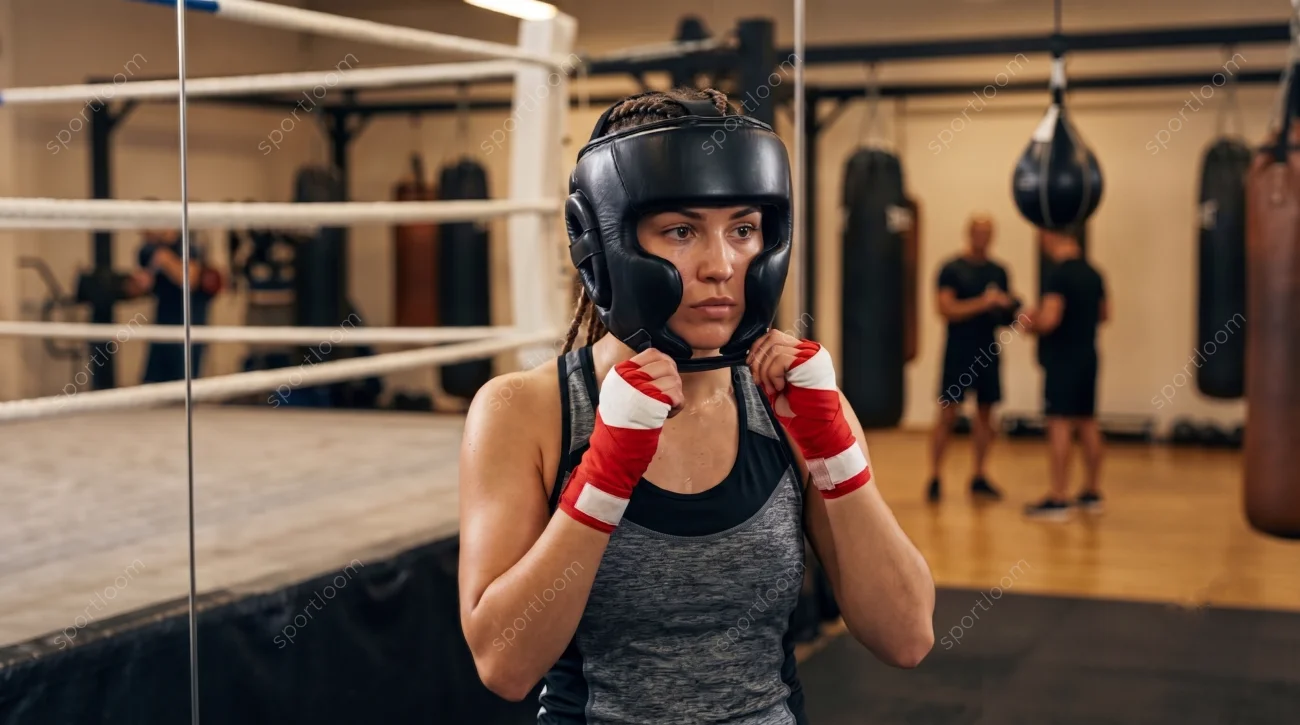
How Should Boxing Headgear Fit?
Boxing headgear should feel snug enough to stay centered when you move, slip punches, or take a light shot—but not so tight that it causes a headache, presses painfully into your temples, or makes your jaw feel trapped.
This sounds simple until you try on a real headguard. Many beginners tighten every strap as hard as possible because they are afraid the headgear will move. Others buy a larger size because the correct size feels unfamiliar during the first few minutes.
Both mistakes create problems.
Headgear that is too loose can rotate, slide over your eyes, expose the forehead, and force you to adjust it between exchanges. Headgear that is too tight can create pressure points, reduce concentration, and make an already hot piece of equipment feel unbearable after a few rounds.
The goal is not maximum pressure. The goal is a stable, even fit.
This guide explains how boxing headgear should fit around the forehead, cheeks, chin, ears, and back of the head, how to measure your head correctly, and how to tell whether the problem is sizing or adjustment.
For a broader overview of protection styles and features, read our guide to choosing boxing headgear.
Quick Answer: What Is the Correct Boxing Headgear Fit?
Correctly fitted boxing headgear should sit level on your head, remain centered when you shake your head, keep the eye openings aligned with your vision, and feel snug without painful pressure. You should be able to open and close your mouth normally, breathe comfortably, and turn your head without the headguard sliding.
A good fit usually has these signs:
- The forehead padding sits above the eyebrows rather than dropping into your vision.
- The cheek protectors sit close to the face without pushing into the eyes.
- The ear openings line up with your ears.
- The chin strap is secure but does not choke or pull your jaw upward.
- The headgear does not rotate when you shake your head or move quickly.
- There are no sharp pressure points at the temples, forehead, crown, or jaw.
Snug is correct. Painful is not.
Why Boxing Headgear Fit Matters More Than Extra Padding
Beginners often focus on how thick the padding looks. In actual sparring, stability matters just as much.
A heavily padded headguard that moves after every jab becomes distracting. You start reaching up to fix it, blinking because a cheek pad has shifted, or lifting your chin to see under the forehead padding. That changes your posture and makes it harder to defend yourself naturally.
A stable headguard lets you forget that you are wearing it. It stays aligned while you slip, roll, pivot, and move backward. You can see punches coming without constantly fighting the equipment.
This is also why the correct size is not automatically the best fit in every brand. Two models labeled “medium” can feel completely different. One may have a shallow crown and tight cheek area, while another feels deeper and wider.
If your current headgear constantly shifts despite careful adjustment, the closure system may simply not suit your head shape. A model with a more structured rear adjustment can help when ordinary hook-and-loop headguards never feel locked in.
You can compare it with other practical options in our best boxing headgear for sparring guide.
How to Measure Your Head for Boxing Headgear
Start with the manufacturer’s sizing chart. Do not assume your hat size or the size of another brand will match.
- Use a soft measuring tape.
- Place it around the widest part of your head.
- Run the tape just above the eyebrows and ears.
- Keep it level around the back of the head.
- Pull it snug, but do not compress the skin.
- Measure twice and compare the result with the brand’s chart.
If you are between sizes, do not automatically choose the larger one. Look at the adjustment range and the shape of the model.
Choose the smaller size only when the manufacturer recommends it and the headguard does not create painful pressure. Choose the larger size when the smaller option cannot sit correctly around the crown, ears, or jaw even with the straps opened.
Common mistake: measuring too high around the forehead. This can produce a smaller number and lead you toward headgear that squeezes the temples.
How Boxing Headgear Should Fit in Each Area
Forehead and Eyebrows
The forehead padding should sit securely above your eyebrows. It should not hang so low that you need to tilt your head back to see.
At the same time, it should not sit unusually high and leave the lower forehead exposed. The headguard should look level from the front rather than tilted backward.
A little pressure across the forehead is normal. A narrow band of painful pressure, throbbing at the temples, or a headache within a few minutes usually means the size or shape is wrong.
Cheeks and Eye Openings
Cheek protectors should sit close enough to stay in position, but they should not push upward into the lower eyelids.
Look straight ahead and then glance left, right, up, and down. Your vision will be more restricted than without headgear, but the padding should not block the center of your view.
If one cheek pad sits higher than the other, first check the top and rear adjustments. Uneven strap tension often pulls the whole headguard sideways.
Ears
Your ears should sit inside the ear openings or directly behind the protective ear cups, depending on the design.
The edge of the opening should not fold the ear forward or press the cartilage painfully. If the ear holes never align even after adjusting the top and back, the model may be too shallow, too small, or simply shaped incorrectly for you.
Chin and Jaw
The chin strap should stop the headgear from lifting, but it should not pull the jaw upward.
You should be able to open your mouth, speak, and breathe normally. When you move your jaw, the headgear should stay stable without the strap digging into your throat.
For models with a padded chin section, the cup should sit under the chin rather than on the front of it.
Crown and Back of the Head
The top adjustment controls how high or low the headgear sits. Many fit problems that look like a wrong size are actually caused by an incorrectly adjusted crown lace or top strap.
The rear closure should hold the headguard against the back of your skull without creating a hard ridge. It should feel evenly secure from the forehead to the back, not tight in one place and loose everywhere else.
How to Adjust Boxing Headgear Step by Step
Do not tighten random straps until the headgear stops moving. Adjust it in a logical order.
- Open every adjustment point. Loosen the top, rear, and chin closures before putting the headgear on.
- Set the height first. Adjust the crown so the forehead and eye openings sit at the correct level.
- Center the cheek and ear protection. Make sure both sides sit evenly.
- Tighten the rear closure. Pull it snug enough to stop rotation without crushing the back of the head.
- Set the chin strap last. It should prevent lifting, not provide all the stability by itself.
- Test movement. Shake your head, look over each shoulder, slip side to side, and perform a few light pivots.
- Test with a partner. Ask a coach or partner to press lightly against the forehead and sides. The headgear should move with your head rather than sliding independently.
Lace-up headgear usually takes longer to adjust but can create a more precise fit. Hook-and-loop models are easier to put on yourself, although some have less fine adjustment.
Signs Your Boxing Headgear Is Too Tight
- You develop a headache within a few minutes.
- Your temples or forehead throb.
- The cheek protectors push into your eyes.
- Your ears feel folded, pinched, or numb.
- You cannot open your mouth comfortably.
- The chin strap presses into your throat.
- You feel strong pressure in one narrow area instead of even contact.
- You want to remove the headgear before the round begins.
New padding can soften slightly with use, but do not expect a painfully small headguard to transform into the correct size. A short break-in period may reduce mild stiffness. It will not fix incorrect dimensions.
This is where beginners often talk themselves into keeping the wrong size. They assume discomfort means “secure.” What usually happens is that the pressure becomes worse once they start sweating and the rounds get harder.
Signs Your Boxing Headgear Is Too Loose
- It rotates when you shake your head.
- The forehead padding drops toward your eyes.
- A jab or glove touch moves it sideways.
- You keep tightening only the chin strap to hold it in place.
- The ear openings do not stay aligned.
- The headguard lifts when you open your mouth or look upward.
- You need to adjust it repeatedly during sparring.
Before changing sizes, tighten the crown and rear closure correctly. If the shell still floats around the head with the straps near their limit, the headgear is probably too large or too deep.
Boxers who want a light, stable headguard without a bulky full-face shape often prefer models with a structured professional-style fit.
For help choosing between cheek protection and more complete facial coverage, see open-face vs full-face boxing headgear.
The Five-Minute Boxing Headgear Fit Test
Trying headgear for ten seconds in front of a mirror is not enough. Use this simple test before deciding that the fit is correct.
- Wear it for five minutes. Pressure points often appear after the first minute.
- Move like you box. Slip, roll, pivot, and step backward rather than only nodding your head.
- Open your mouth and talk. Check that the chin strap and cheek pads do not restrict the jaw.
- Check your vision. Look straight ahead and use peripheral vision on both sides.
- Press the shell lightly. The headguard should stay centered instead of sliding over the skin.
Then remove it and check your skin. Light, even marks can happen with a snug fit. Deep red lines, numbness, or painful indentations suggest excessive pressure.
Do Different Headgear Styles Fit Differently?
Open-Face Headgear
Open-face designs usually feel lighter and less restrictive. Because there are fewer cheek structures helping to stabilize the front, the crown and rear adjustment become especially important.
Cheek-Protector Headgear
Cheek protectors should frame the face rather than squeeze it. This style often gives a useful balance of visibility and facial coverage, but the correct width matters.
Full-Face and Face-Bar Headgear
Full-face models can feel larger even when the size is correct. The face bar or extra padding changes your visual reference and may feel unfamiliar at first.
The front structure should not rest directly against the nose. It should remain stable without forcing you to tighten the headguard painfully.
No style removes the need for controlled sparring. Headgear can help reduce cuts and superficial facial damage, but it does not make hard rounds harmless. Our guide Do You Need Headgear for Boxing? explains when it is useful and what it cannot do.
Common Beginner Headgear Fit Mistakes
Tightening the Chin Strap First
The chin strap is not supposed to carry the whole headguard. Set the height and rear fit first.
Buying by Age or Body Weight
Head circumference and shape matter more than general body size. Two people of the same weight may need different sizes.
Assuming Every Medium Fits the Same
Brand sizing is not standardized. Always use the chart for the exact model.
Ignoring Head Shape
Some headguards fit rounder heads better; others feel narrower or deeper. If one model creates pressure at the temples while remaining loose front to back, changing the size may not solve the problem.
Accepting Blocked Vision
Some restriction is normal, especially with full-face designs. Losing the center of your view or repeatedly lifting your chin to see is not.
Expecting Painful Padding to Break In
Padding may soften, but the shell dimensions will not change dramatically. Mild firmness is acceptable; pain is a warning.
How to Check Your Headgear Before Sparring
- Confirm every strap, lace, and buckle is secure.
- Make sure loose lace ends cannot reach your eyes.
- Check that the headgear is level and centered.
- Move your jaw and verify the chin strap is comfortable.
- Ask your coach to check the forehead and cheek position.
- Do a short movement drill before the first round.
- Stop and readjust if the headguard shifts repeatedly.
Do not wait until you are exchanging punches to discover that the headgear drops over your eyes. A thirty-second check is easier than repeatedly fixing it during a round.
FAQ: Boxing Headgear Fit
Should boxing headgear feel tight?
It should feel snug and secure, but not painfully tight. Even contact is normal. Headaches, numbness, pinched ears, or strong temple pressure mean the fit is too tight.
Should boxing headgear move when you get hit?
A small amount of movement is possible, but it should not rotate, slide over your eyes, or become noticeably off-center after light contact.
How low should boxing headgear sit?
The forehead padding should sit just above the eyebrows while leaving the center of your vision clear. The cheek and ear sections should align naturally without pulling the headguard downward.
Can boxing headgear be too small?
Yes. Signs include headaches, painful pressure points, ears that do not align with the openings, cheek pads pressing into the eyes, and a chin strap that cannot sit correctly.
Can boxing headgear be too big?
Yes. Oversized headgear rotates, lifts, drops toward the eyes, and requires excessive chin-strap tension to stay in place.
Will boxing headgear stretch or break in?
Padding and synthetic or leather surfaces may soften slightly, but the overall size will not change enough to fix a clearly incorrect fit.
Should the chin strap be very tight?
No. It should prevent the headgear from lifting while still allowing normal speech, breathing, and jaw movement. Most stability should come from the crown and rear adjustment.
What should I do if I am between headgear sizes?
Compare the adjustment range, head shape, and manufacturer guidance. Choose the option that stays centered without painful compression rather than automatically sizing up or down.
Final Takeaway: Snug, Centered, and Comfortable
Boxing headgear should fit firmly enough to move with your head, not around it.
The forehead padding should stay above your eyebrows, the cheek and ear protection should remain aligned, and the chin strap should prevent lifting without restricting your jaw.
Do not confuse pain with security. A good fit feels evenly snug and remains stable through realistic boxing movement. A bad fit either creates concentrated pressure or forces you to adjust the headguard again and again.
Measure carefully, follow the exact brand chart, adjust the crown before the chin strap, and test the headgear for several minutes before sparring. When the size and shape are right, the headguard should stop being the thing you think about during the round.
Related Articles and Reviews
Check it now