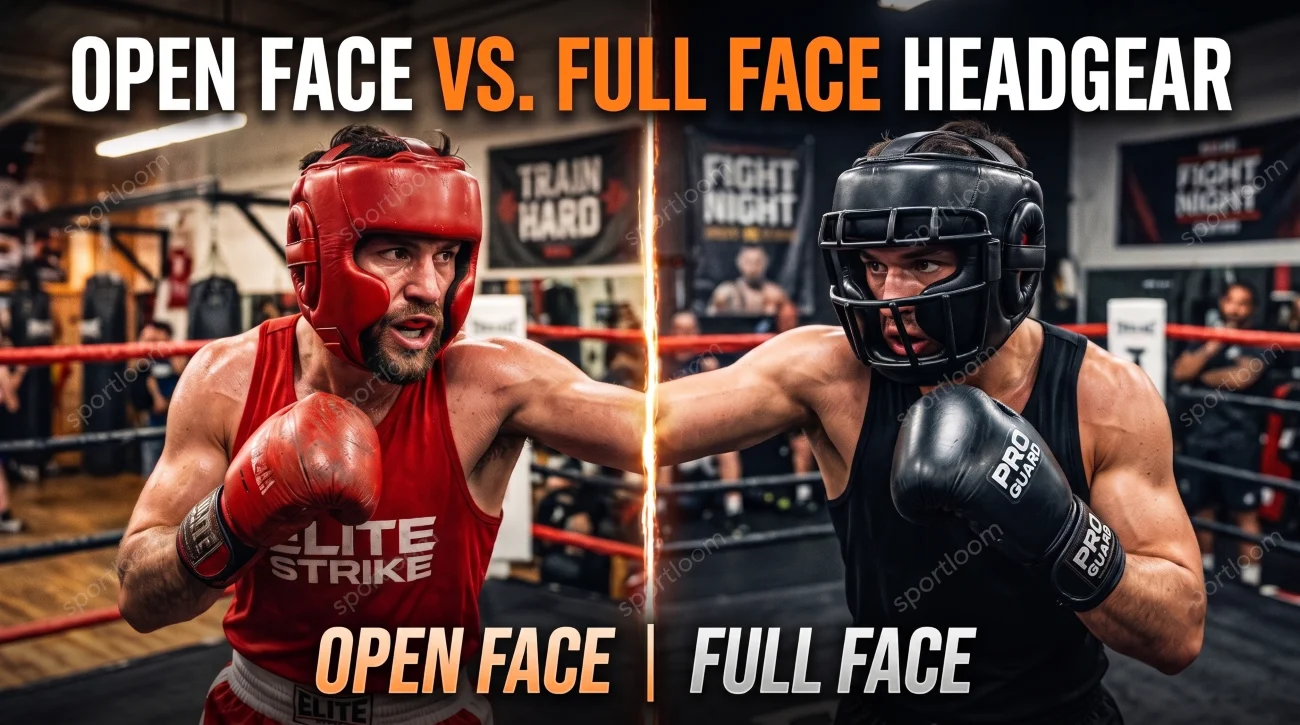
Open Face vs Full Face Headgear
Choosing between open face and full face headgear sounds simple until you put both styles on and start moving.
Open face headgear feels lighter, gives you a clearer view, and makes it easier to react naturally. Full face headgear adds more coverage around the cheeks, nose, or front of the face, but that extra protection can also feel bulkier and reduce visibility.
Many beginners assume the model with the most padding must be the safest choice. What usually happens is that they buy a large full face headguard, feel protected during the first round, and then realize they cannot see hooks or uppercuts as clearly as expected.
The opposite mistake also happens. A boxer chooses minimal open face headgear for comfort, then discovers that regular sparring leaves the nose, cheeks, and lips more exposed than they are comfortable with.
The right choice is not about which design is universally better. It depends on how hard you spar, what you are trying to protect, how much visibility you need, and whether the headgear stays stable when you move.
This guide compares open face vs full face headgear in practical terms, including protection, visibility, fit, comfort, sparring use, and common beginner mistakes.
For a broader overview of sizing and construction, see our guide on how to choose boxing headgear.
Quick Answer: Open Face or Full Face Headgear?
Choose open face headgear if your priorities are visibility, lighter weight, natural movement, and learning to defend without a bulky frame around your face.
Choose full face headgear if you want more protection from cuts, bruises, nose contact, or direct facial impact and you accept some additional bulk and reduced vision.
For most controlled boxing sparring, a well-fitted open face model with cheek protectors offers the best balance. It protects common contact areas while still allowing you to see punches and move your head naturally.
A face-bar or highly enclosed full face model makes more sense when protecting the nose is a major concern, when facial cuts would create a problem, or when a coach specifically recommends it for your situation.
Neither style makes hard sparring safe, and neither should be treated as reliable concussion prevention. Headgear is most useful for reducing superficial facial injuries such as cuts, swelling, and abrasions.
What Open Face and Full Face Headgear Actually Mean
Boxing brands do not always use these terms consistently, which creates unnecessary confusion.
Open Face Headgear
Traditional open face headgear protects the forehead, temples, ears, sides, and back of the head while leaving most of the face exposed. Some models have no cheek padding, while others use compact cheek protectors but still leave the nose and mouth open.
In practical gym conversations, many boxers still call cheek-protector headgear “open face” because there is no bar across the front of the face.
Full Face Headgear
Full face headgear generally provides larger cheek pads, more chin coverage, or a protective bar across the front. A face-bar model creates space in front of the nose so a straight punch is less likely to land directly on it.
Some products marketed as full face headgear do not have a bar. They simply use larger cheek protectors and more wraparound padding. That is why you should examine the actual shape instead of relying only on the product name.
Open Face vs Full Face Headgear Comparison
| Feature | Open Face Headgear | Full Face Headgear |
|---|---|---|
| Facial coverage | Low to moderate | Moderate to high |
| Visibility | Usually wider and clearer | Can be reduced by cheek pads or face bar |
| Nose protection | Limited | Better, especially with a face bar |
| Weight | Usually lighter | Usually heavier |
| Heat | Better airflow | Warmer and more enclosed |
| Natural head movement | More natural | Can feel bulkier |
| Protection from cuts | Good around covered areas | Better facial coverage overall |
| Fit sensitivity | Important | Extremely important because movement can block vision |
| Best for | Technical sparring, visibility, regular training | Nose concerns, facial protection, controlled sparring |
| Main tradeoff | More exposed face | More bulk and possible blind spots |
Which Style Offers Better Protection?
Full face headgear offers more physical coverage. That part is straightforward. Larger cheek pads can shield the cheekbones, and a face bar can reduce direct contact with the nose and mouth.
This can be useful if you bruise easily, have a previously injured nose, need to avoid cuts before work or competition, or simply feel more confident with additional facial coverage.
But more coverage does not mean complete protection. Punches still move the head, impact still transfers through the padding, and shots can enter through openings around the eyes or underneath the bar.
What Open Face Headgear Protects Well
A good open face model protects the areas that commonly rub, collide, or cut during sparring:
- Forehead and eyebrows
- Temples
- Ears
- Sides and back of the head
- Cheekbones when cheek protectors are included
The face remains more exposed, but you often see punches earlier. That matters because avoiding or rolling with a punch is better than relying on thicker padding to absorb it.
What Full Face Headgear Protects Better
Full face designs are strongest when your main concern is direct facial contact. A properly positioned face bar can prevent many straight punches from landing cleanly on the nose.
Large cheek protectors also reduce contact with the cheekbones and may help limit cuts around the face. The tradeoff is that the same protective structure can block part of your lower or peripheral vision.
Important: headgear should not encourage harder sparring. Extra facial coverage can reduce visible damage while the boxer still absorbs significant impact.
Visibility Is the Biggest Practical Difference
Visibility is where open face headgear usually wins.
With less material around the eyes and cheeks, it is easier to track shoulders, gloves, and body movement. You are less likely to lose sight of a hook coming from the side or an uppercut entering from below.
Many beginners only test headgear while standing in front of a mirror. It can look perfectly open when you are upright and relaxed. The problem appears when you tuck your chin, raise your guard, sweat, and begin moving.
If the headgear shifts even one or two centimeters, a thick cheek pad may rise into your line of sight. A face bar can also become distracting when you are trying to judge distance.
Why Better Vision Can Improve Protection
Seeing a punch earlier gives you more time to block, slip, step back, or reduce its impact. This is why some experienced boxers prefer a lighter open design even though it covers less of the face.
The headguard does less, but the boxer can do more.
This does not make open face headgear automatically safer. It means protection is a balance between physical coverage and the ability to react.
Fit and Stability Matter More Than the Label
A stable open face headguard is usually better than a loose full face headguard.
When headgear moves during sparring, it can rotate, cover one eye, press into the nose, or force you to stop and adjust it. Extra padding makes this problem worse because there is more material to shift.
The headgear should feel snug around the head without creating sharp pressure points. The forehead opening should remain centered, the cheek pads should not push into your eyes, and the chin strap should prevent vertical movement without choking you.
A Simple Fit Test
- Put the headgear on and tighten the rear, top, and chin adjustments.
- Shake your head left and right without holding the headgear.
- Tuck your chin and raise a normal boxing guard.
- Look left, right, up, and down without moving your whole head.
- Ask a training partner to apply light pressure to the forehead and cheek pads.
If the eye openings move away from your eyes, the headguard is too loose or the shape does not match your head.
Sizing is especially important with face-bar headgear. If the bar sits too close, your nose may still contact it under impact. If it sits too far away, the entire headguard may feel large and unstable.
Comfort, Heat, and Breathing
Open face headgear generally feels cooler. More of the face is exposed, airflow is better, and there is less material trapping heat around the cheeks and mouth.
During one short technical round, the difference may feel small. During several rounds, especially in a warm gym, a heavy full face model can become noticeably hotter.
Sweat also changes fit. A headguard that felt secure when dry may begin sliding once the lining becomes wet. This is another reason a complicated or bulky design must fit correctly from the beginning.
Does Full Face Headgear Make Breathing Harder?
It should not directly restrict breathing, but it can feel more claustrophobic. Large cheek pads, a chin section, and a face bar place more material close to the mouth and nose.
Some boxers adapt quickly. Others feel distracted and tense, especially when they are already learning to breathe under pressure. If this sounds familiar, a lighter cheek-protector design may be easier to use consistently.
Which Headgear Is Better for Sparring?
For normal technical sparring, open face headgear with cheek protection is often the most practical choice. It covers the forehead, ears, and cheekbones while preserving enough visibility for defensive work.
For boxers who need additional nose protection, a face-bar design can be useful. It may also be appropriate when avoiding facial marks is unusually important.
The intensity of sparring matters more than the style of headgear. Light, controlled rounds with a responsible partner are safer and more productive than hard rounds performed behind the thickest equipment available.
For model-specific recommendations, compare our picks for the best boxing headgear for sparring.
Technical Sparring
Choose the lightest stable headgear that gives you adequate coverage. Visibility and comfort support better learning because you can read punches and maintain normal defensive habits.
Harder or Competition-Preparation Sparring
Additional cheek or nose protection may reduce cuts and bruising, but it should not justify uncontrolled intensity. Your coach should decide the pace, glove size, partner, and purpose of the rounds.
Beginners Starting Contact
A secure cheek-protector model is usually the easiest starting point. It feels protective without creating the tunnel vision that some beginners experience in bulky full face gear.
Does Full Face Headgear Create Bad Defensive Habits?
The headgear itself does not create bad habits, but the way you use it can.
Some beginners feel so protected behind a face bar that they stop reacting properly to straight punches. They accept contact instead of moving the head, controlling distance, or keeping the guard organized.
Another issue is distance perception. A bar sits in front of the face, so it can take time to understand how close an opponent really is. After removing it, punches may appear to reach the face differently.
Open face headgear gives more realistic visual feedback. You know immediately when the guard is open or the chin is too high. That can support defensive learning, provided the sparring remains controlled.
Whichever style you wear, the goal should remain the same: see punches, defend intelligently, and avoid unnecessary impact.
Common Beginner Mistakes
Choosing the Thickest Model Automatically
More padding can help with cuts and facial contact, but excessive bulk may reduce vision and make you absorb punches you would otherwise see.
Ignoring Head Shape
Two headguards in the same labeled size can fit very differently. Some suit rounder heads, while others feel better on narrow or longer head shapes.
Leaving the Chin Strap Too Loose
A loose chin strap allows the headgear to lift when hit. The eye opening then moves, and the cheek padding may block vision.
Trying to Fix a Bad Fit by Overtightening
If the headguard only stays in place when every strap is painfully tight, the size or shape is probably wrong. Pressure headaches are not a normal break-in requirement.
Using Headgear as Permission to Spar Hard
Headgear can hide visible damage. A boxer may look fine while still taking too many clean punches. Controlled intensity and good partners matter more than the amount of padding.
Open Face Headgear Pros and Cons
Pros
- Wider peripheral and lower vision
- Lighter and less bulky feel
- Better airflow during long sessions
- More natural distance perception
- Easier transition between sparring and drills
- Often better for technical defensive development
Cons
- Less protection for the nose and mouth
- More risk of facial bruising or cuts
- Minimal models may leave cheekbones exposed
- Can feel less reassuring for nervous beginners
Full Face Headgear Pros and Cons
Pros
- More coverage around the cheeks and front of the face
- Face-bar models offer better nose protection
- Can reduce cuts, bruising, and direct facial contact
- Useful for boxers with specific facial protection concerns
- May increase confidence when first becoming comfortable with contact
Cons
- Heavier and warmer
- Can reduce peripheral or lower vision
- More sensitive to poor sizing and movement
- May affect distance perception
- Can feel claustrophobic
- Usually costs more for a well-designed model
Best Choice by Situation
Best for Most Beginners
A stable open face model with cheek protectors is the safest default recommendation. It provides meaningful coverage without making the boxer feel trapped or blocking too much vision.
Best for Nose Protection
Choose full face headgear with a correctly positioned face bar. Do not assume large cheek pads alone will prevent straight punches from reaching the nose.
Best for Learning Defense
Open face headgear usually gives clearer visual information and more realistic distance perception. It is easier to see mistakes and react naturally.
Best for Avoiding Cuts and Visible Marks
Full face headgear provides more coverage, although no model can guarantee a clean face after sparring.
Best for Hot Gyms and Long Sessions
Open face headgear is generally cooler, lighter, and easier to tolerate over multiple rounds.
Best for Regular Controlled Sparring
A quality cheek-protector design usually offers the strongest balance of visibility, protection, and comfort.
How to Decide Before You Buy
Use this order of priorities:
- Fit: the headgear must stay centered without painful pressure.
- Visibility: you must see hooks, uppercuts, and body movement with your chin tucked.
- Coverage: choose the amount of facial protection your sparring situation requires.
- Comfort: consider heat, weight, lining, and how the chin strap feels.
- Training purpose: technical sparring and nose-protection needs may require different designs.
Do not choose based only on appearance or the number of padding layers in a product description. The best boxing headgear is the one that remains stable, lets you see, and matches the way you actually spar.
FAQ
Is open face or full face headgear better for boxing?
Open face headgear is better for visibility, lighter weight, and natural movement. Full face headgear is better when additional protection for the nose, cheeks, and mouth is the priority.
Does full face headgear protect the nose?
A properly fitted face-bar model offers the strongest nose protection. Large cheek pads may reduce some contact, but they do not protect the nose as reliably as a bar positioned in front of it.
Does boxing headgear prevent concussions?
No boxing headgear can guarantee concussion prevention. Its clearest practical benefit is reducing cuts, abrasions, bruising, and some direct facial contact. Sparring control remains essential.
Is full face headgear harder to see through?
Usually yes. Large cheek pads and face bars can reduce peripheral or lower vision, especially if the headgear shifts. Well-designed and properly fitted models minimize this problem.
Should beginners use full face headgear?
Beginners can use it, but a secure cheek-protector model is often easier to learn in. Full face headgear makes more sense when the beginner has a specific need for additional facial or nose protection.
Can you spar without cheek protection?
That depends on gym rules and sparring intensity. Minimal open face headgear offers excellent vision but leaves more of the face exposed. Many boxers prefer cheek protectors for regular sparring.
Why does my headgear keep moving?
The size may be wrong, the rear or top adjustment may be loose, or the shape may not match your head. A tighter chin strap alone will not always fix an unstable fit.
Final Verdict
For most beginner and intermediate boxers, open face headgear with cheek protectors is the better all-around choice. It gives useful protection while preserving the visibility and movement needed for productive sparring.
Full face headgear is the better specialist option. Choose it when protecting the nose or reducing direct facial contact matters more than having the lightest, most open design.
The most protective-looking headguard is not always the most practical one. A bulky model that shifts or blocks punches from view can create its own problems.
Choose open face headgear for balance and visibility. Choose full face headgear for additional facial coverage. In both cases, prioritize a secure fit and controlled sparring.
Related Articles and Reviews
Check it now