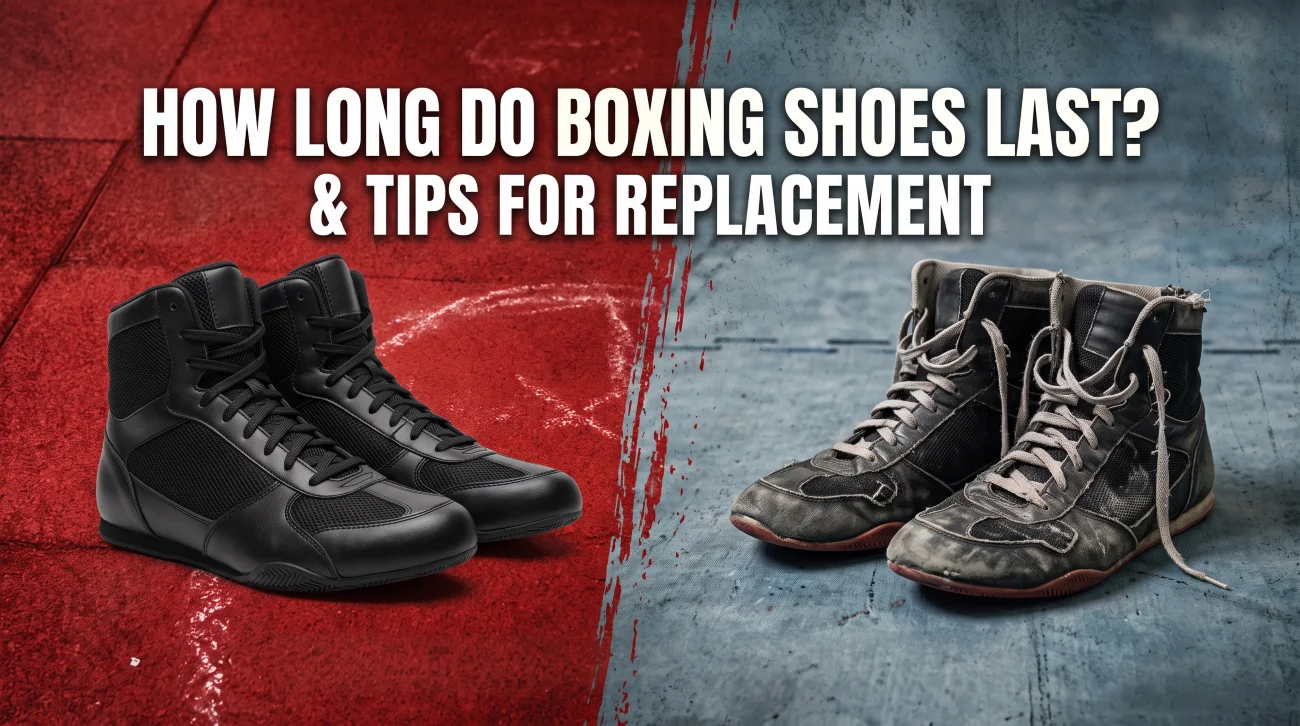
How Long Do Boxing Shoes Last?
Boxing shoes can last anywhere from several months to a few years, but the calendar is not the most useful way to judge them. A boxer training twice a week on clean indoor floors may get years from one pair. Someone doing hard footwork, sparring, and conditioning five or six days a week can wear through the same type of shoe much faster.
The bigger question is not simply how old are your boxing shoes? It is whether the sole still grips predictably, the upper still holds your foot securely, and the shoe still lets you pivot without sliding or twisting inside it.
Many beginners keep boxing shoes until they look completely destroyed. That is usually too late. Boxing footwear can lose useful performance before the upper tears or the sole separates.
This guide explains how long boxing shoes usually last, what wears out first, how different training habits affect lifespan, and the signs that tell you it is time to replace them.
Quick Answer: What Is the Average Lifespan of Boxing Shoes?
For most recreational boxers, a good pair of boxing shoes can reasonably last around 1–2 years when used only for indoor boxing training. Frequent competitors and high-volume gym users may wear them out in 6–12 months, while occasional beginners can sometimes keep a pair much longer.
Those numbers are only practical ranges, not expiration dates. Your training surface, bodyweight, footwork style, shoe construction, and whether you wear the shoes outside matter more than the date you bought them.
Replace boxing shoes when traction becomes inconsistent, the sole is visibly smooth or separating, the upper no longer locks the foot in place, or your foot starts moving inside the shoe during pivots.
What Actually Wears Out on Boxing Shoes?
Boxing shoes are light because they are built for speed, floor feel, and movement rather than thick cushioning. That is part of what makes them useful, but it also means there is less material between your foot and the floor than in a running shoe.
1. The outsole loses its useful grip
The sole is usually the first part worth watching. Boxing shoes need enough traction to let you push off sharply, but not so much that your foot sticks during a pivot. As the tread wears, that balance changes.
At first you may notice only a slightly smoother patch under the ball of the foot. Later, you may start slipping when you change direction or feel one foot grip differently from the other. That inconsistency matters more than whether the sole still looks acceptable from a distance.
2. The upper stretches and stops locking the foot down
The mesh, synthetic leather, knit, eyelets, and seams all take repeated stress. Over time, the shoe can become softer and roomier. A little break-in is good. Too much movement is not.
If your heel lifts, your forefoot slides sideways, or you have to overtighten the laces to feel secure, the shoe may be past its best even if the sole is still usable.
3. The structure around the ankle softens
High-top boxing shoes do not work like a rigid ankle brace, but the upper still contributes to a secure feeling around the ankle and lower leg. Repeated bending, sweat, and pulling the shoes on and off gradually soften that structure.
If the shoe starts folding or collapsing in places where it used to feel supportive, that is another sign of accumulated wear.
If you are still deciding what type of shoe makes sense for your training, see our guide to choosing boxing shoes.
How Long Boxing Shoes Last by Training Frequency
Training volume changes everything. Someone doing one technical class per week puts very different stress on a shoe than someone sparring, doing pad work, and drilling footwork almost every day.
| Training Use | Practical Lifespan Range | What Usually Wears First |
|---|---|---|
| 1–2 sessions per week | Often 1.5–3 years | Upper aging, tread polishing |
| 3–4 sessions per week | Often 1–2 years | Forefoot tread, side support |
| 5–6 sessions per week | Often 6–18 months | Sole grip, flex points, upper stretch |
| Competition + hard gym use | Sometimes under 12 months | Pivot zone, outsole edge, lockdown |
These are useful expectations, not guarantees. A lightweight shoe can be completely fine after two years of clean indoor use, while a newer pair can be ruined quickly by outdoor pavement.
That is why I would judge boxing shoes by condition first and age second.
Training Surface Has a Huge Effect on Durability
If you want boxing shoes to last, the simplest rule is also the most important: do not use them as everyday sneakers.
Ring canvas and clean gym floors
This is what boxing shoes are made for. Smooth indoor surfaces create relatively controlled wear. You are still grinding the forefoot during pivots and pushing off the edge of the sole, but the material is not being attacked by rough asphalt.
Rubber gym flooring
Rubber flooring can be more aggressive. It creates plenty of grip, which is useful, but repeated pivots can wear tread faster than a smoother ring canvas. It can also make some very grippy shoes feel sticky.
Concrete and pavement
This is where lifespan drops quickly. Thin boxing outsoles are not designed for walking to the gym, running outside, or doing roadwork. Abrasive surfaces wear down the rubber and edges far faster than normal boxing movement.
Beginner tip: carry your boxing shoes in your gym bag and change when you arrive. That one habit can add a surprising amount of useful life to a pair.
Your Footwork Style Can Wear Shoes Unevenly
Shoes do not wear evenly because boxers do not move evenly. Most people have a preferred stance, a stronger push-off leg, and habitual pivot patterns.
An orthodox boxer may repeatedly load and rotate different areas than a southpaw. A boxer who circles constantly can wear the outer edge differently from someone who mostly works forward and backward. Frequent pivot drills concentrate wear under the ball of the foot.
This is also why looking only at the heel is misleading. Running shoes often show obvious heel wear. Boxing shoes may still look fine at the heel while the forefoot traction is nearly gone.
If you are actively working on movement, our basic boxing footwork guide explains the stepping and pivoting patterns that put the most repeated stress on boxing footwear.
7 Signs It Is Time to Replace Your Boxing Shoes
- You slip during normal movement. If the floor has not changed but your traction has, inspect the sole.
- The tread is smooth under the forefoot. The pivot area commonly wears before the rest of the shoe.
- The outsole is separating from the upper. Small cosmetic gaps can grow quickly once lateral movement keeps pulling them apart.
- Your heel moves inside the shoe. Lockdown matters for fast direction changes.
- The shoe feels wider than it used to. Stretching through the upper can reduce lateral stability.
- One shoe grips differently from the other. Uneven traction can make footwork feel awkward and unpredictable.
- You notice new foot, ankle, or knee discomfort while moving. Shoes are not always the cause, but worn traction or poor lockdown is worth checking.
You do not need to throw away a pair because of a scuff or faded logo. Cosmetic wear is normal. The important question is whether the shoe still performs its job.
Do Expensive Boxing Shoes Last Longer?
Sometimes, but not automatically.
Premium shoes may use stronger reinforcements, more sophisticated uppers, better outsole construction, or more precise stitching. That can improve long-term durability. But many expensive boxing shoes are also designed to be extremely light. Lightweight performance materials are not necessarily indestructible.
A $200 shoe used outdoors can die faster than a $100 shoe kept strictly inside the gym.
Fit also matters. If a shoe is too large and your foot slides, the upper and sidewalls take unnecessary stress. If it is too small, the toe box, seams, and mesh can stretch or tear sooner.
For beginners, buying the right type of shoe at the right fit usually matters more than simply buying the most expensive model. Our best boxing shoes for beginners guide is a better starting point if you are choosing your first pair.
If you are comparing dedicated boxing footwear with cheaper crossover options, read boxing shoes vs wrestling shoes before buying.
How to Make Boxing Shoes Last Longer
Keep them indoor-only
This is the biggest one. Do not walk across parking lots, sidewalks, or rough outdoor concrete in thin boxing soles.
Let them dry after training
Boxing shoes get sweaty. Do not leave them zipped inside a damp gym bag until the next session. Open the shoes, loosen the laces, and let them dry at room temperature.
Avoid blasting them with direct high heat. Heat can be hard on adhesives, synthetic materials, and shaped components.
Untie them before taking them off
Pulling your foot out of a tightly laced high-top puts unnecessary stress on the heel, seams, eyelets, and upper. It saves ten seconds and slowly damages the part responsible for keeping your foot secure.
Clean the outsole when it gets dusty
Sometimes shoes feel slippery because the sole is dusty, not worn out. A clean outsole can restore traction. This is especially common in multi-use gyms where the floor collects chalk, dust, or residue.
Use a second pair if you train very frequently
If you box almost every day, rotating two pairs lets each pair dry fully and spreads the wear. This is not necessary for most beginners, but it can make sense for high-volume training.
Why You Should Not Replace Worn Boxing Shoes With Running Shoes
A common beginner reaction is: “My boxing shoes are worn out, but my running shoes still have plenty of cushioning, so I will just use those.”
That solves the wrong problem.
Running shoes are designed primarily for forward motion and impact absorption. Boxing needs stable lateral movement, controlled grip, quick weight transfer, and smooth pivots. A tall cushioned running sole can feel unstable when you change direction quickly.
If you are attending your first session and own nothing else, regular athletic shoes are understandable. But once you are training consistently, replacing worn boxing shoes with another suitable combat-sport shoe makes more sense than going back to bulky running footwear.
Common Mistakes That Shorten Boxing Shoe Lifespan
- Wearing them to and from the gym. Pavement can destroy thin soles surprisingly quickly.
- Leaving them wet in a closed bag. Sweat and trapped moisture are hard on the lining and upper.
- Buying too large for “comfort.” Extra internal movement stresses the shoe and makes footwork worse.
- Using one pair for boxing, running, lifting, and everyday wear. Boxing shoes are specialized equipment.
- Ignoring uneven wear. One polished pivot zone can matter even when the rest of the tread looks new.
- Waiting for a total failure. A shoe does not need to split in half before it should be retired from boxing.
FAQ: Boxing Shoe Lifespan
How often should you replace boxing shoes?
There is no fixed schedule. Recreational boxers may get 1–2 years or more, while high-volume athletes may need a new pair within a year. Replace them based on traction, sole condition, and fit rather than age alone.
Can boxing shoes last for years?
Yes. A good pair used only indoors once or twice per week can last several years, especially if the outsole remains grippy and the upper still holds the foot securely.
Do boxing shoes wear out faster than running shoes?
Not necessarily, but they are built differently. Boxing shoes use thinner, lighter soles and can wear very quickly on outdoor surfaces. Running shoes have more outsole and cushioning material but also lose performance through compressed foam.
Can I wear boxing shoes outside?
You can, but it is one of the fastest ways to shorten their lifespan. Rough pavement wears thin boxing outsoles much faster than ring canvas or indoor gym flooring.
Is a smooth boxing shoe sole dangerous?
If the smoothness is caused by worn tread and the shoe slips during boxing movement, it is time to replace it. Some boxing shoes have naturally minimal tread, so judge the change in traction rather than appearance alone.
Should I replace boxing shoes if the upper is torn?
A small cosmetic tear may not immediately affect performance. Replace the shoe when the damage compromises lockdown, exposes structural areas, spreads through a seam, or lets your foot move during lateral movement.
Can I glue a separating boxing shoe sole?
A minor separation can sometimes be repaired temporarily with an appropriate shoe adhesive, but do not rely on a failing sole for hard sparring or competition. If the bond keeps opening during pivots, replacement is the safer option.
Final Verdict: Replace Boxing Shoes by Performance, Not by Date
For most recreational boxers, a decent pair of boxing shoes can last roughly one to two years and sometimes much longer. Serious, high-volume training can shorten that considerably.
The best indicator is not age. Look at the forefoot tread, outsole edges, heel lockdown, upper stretch, and how the shoes behave when you pivot and change direction.
If they still grip consistently, hold your foot securely, and move naturally, keep using them. If you are compensating for slipping, overtightening the laces, or feeling your foot move inside the shoe, the useful life is probably over.
And if you want the next pair to last, keep them in the gym. Boxing shoes are tools for footwork, not sneakers for the walk home.
Related Articles and Reviews
Check it now