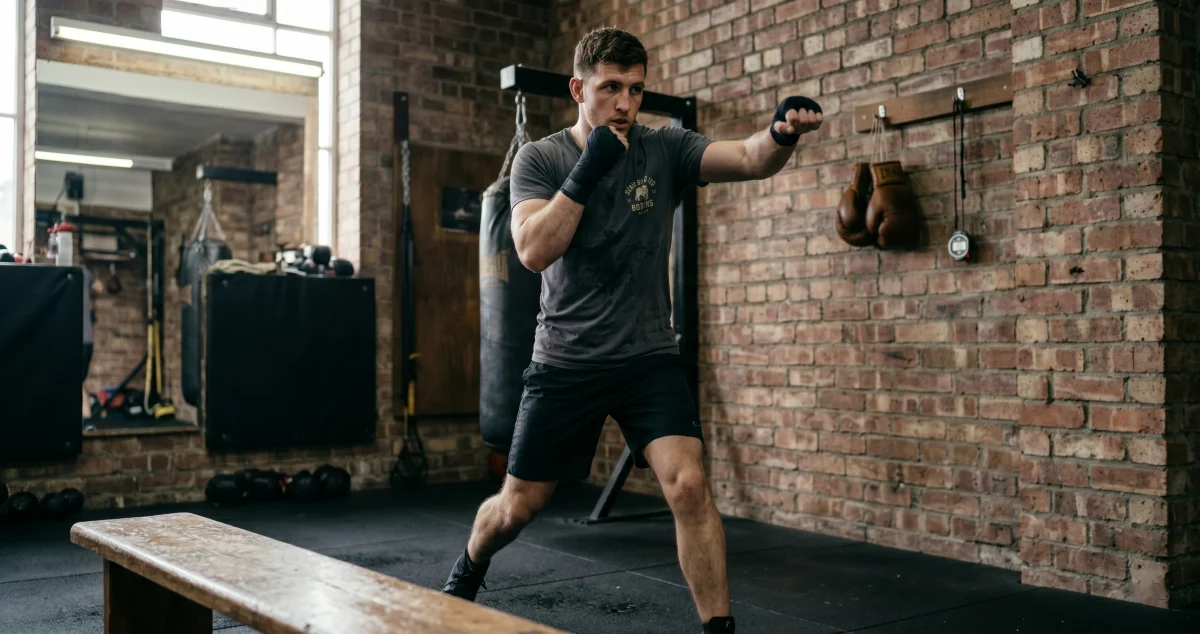
How to Shadow Box for Beginners
Shadow boxing looks simple until you actually try to do it.
You stand in front of a mirror, raise your hands, throw a few punches in the air, and after thirty seconds you start wondering if you are doing anything useful at all.
That is completely normal.
Many beginners think shadow boxing is just “pretending to fight.” But good shadow boxing is one of the most useful habits you can build in boxing. It teaches balance, rhythm, footwork, breathing, defense, and clean punching without the pressure of a heavy bag or a partner trying to hit you back.
The problem is that most beginners shadow box too fast, too stiff, or with no purpose. They throw random punches, forget their feet, drop their hands, hold their breath, and turn the round into awkward arm movement.
This guide explains how to shadow box for beginners in a practical way: what to focus on, what mistakes to avoid, how to structure rounds, and how to make shadow boxing feel like real training instead of empty movement.
If you are also learning bag work, read our guide on how to hit a heavy bag properly. Shadow boxing and heavy bag training work best together when you understand the role of each one.
Quick Answer: What Is the Best Way to Shadow Box as a Beginner?
The best way to shadow box as a beginner is to slow down, keep your stance balanced, throw simple combinations, move your feet after punching, and imagine a real opponent in front of you.
Start with short rounds. One to three minutes is enough. Focus on clean technique rather than speed or power.
A simple beginner shadow boxing round can look like this:
- Keep your hands up and chin tucked.
- Throw a jab.
- Bring the jab hand back to your face.
- Step slightly to the side.
- Throw a jab-cross.
- Move your head after the combination.
- Reset your stance.
That may sound basic, but basic is exactly what beginners need.
Shadow boxing is not about looking flashy. It is about building habits that still work when you are tired, nervous, or under pressure.
Why Shadow Boxing Matters for Beginners
Beginners often want to skip shadow boxing and go straight to hitting the bag. The heavy bag feels more satisfying because you hear the impact and feel like you are doing real boxing.
But the heavy bag can hide mistakes.
You can hit hard with poor balance. You can throw combinations while standing too square. You can push punches instead of snapping them. You can forget defense because the bag does not punch back.
Shadow boxing exposes those mistakes.
When there is no bag to lean on and no target to distract you, you can feel whether your stance is stable, whether your punches return properly, and whether your feet are actually moving with your hands.
Think of shadow boxing as technical practice. The heavy bag builds impact and conditioning. Shadow boxing builds coordination, timing, balance, and boxing habits.
If you learn to shadow box correctly early, your bag work, pad work, sparring, and overall boxing movement improve faster.
How to Set Up Before You Start Shadow Boxing
Use Enough Space
You do not need a ring. You do not need a fancy gym. But you do need enough space to step forward, step back, and move side to side without hitting furniture or slipping.
A small clear area is enough for beginner shadow boxing. If you can take two steps in each direction, you can train.
Wear the Right Shoes if Possible
You can shadow box barefoot on a safe surface, but many beginners train on gym floors where proper shoes help. Avoid soft running shoes with thick soles if you are practicing serious footwork, because they can make pivots feel unstable.
If footwear is confusing, our guide on how to choose boxing shoes explains what matters for boxing movement.
Use a Mirror Carefully
A mirror can help you check your guard, stance, and posture. But do not stare at yourself the whole time.
What usually happens is beginners start posing instead of moving naturally.
Use the mirror to notice mistakes, then imagine an opponent and move as if someone is actually in front of you.
Start With Your Boxing Stance
Before you throw punches, check your stance.
For most beginners, a good basic boxing stance means:
- Feet about shoulder-width apart.
- Lead foot slightly forward.
- Rear heel light or slightly raised.
- Knees soft, not locked.
- Hands up near your face.
- Chin slightly tucked.
- Elbows relaxed and close enough to protect the body.
Do not stand too narrow. If your feet are too close together, you will lose balance when you punch.
Do not stand too wide either. If your stance is too wide, movement becomes slow and heavy.
The goal is to feel athletic, balanced, and ready to move in any direction.
Your First Beginner Shadow Boxing Round
For your first round, do not try to throw every punch you know. Keep it simple.
Round 1: Jab, Guard, Reset
Set a timer for one minute.
During the round, only work on the jab.
- Start in your stance.
- Throw a relaxed jab.
- Bring the hand straight back to your face.
- Take a small step.
- Reset your stance.
- Repeat.
This round may feel too easy, but it teaches one of the most important boxing habits: punch and recover.
Many beginners throw a punch and leave the hand floating in the air. That habit becomes dangerous later because it leaves your face open.
Round 2: Jab-Cross and Step Out
In the second round, add the cross.
Use a simple pattern:
- Jab-cross.
- Hands return to guard.
- Small step left or right.
- Reset.
Do not swing hard. Rotate the shoulders, keep your balance, and make sure the rear hand comes back after the cross.
Round 3: Add Defense
In the third round, imagine your opponent punches back after your combination.
Try:
- Jab-cross, then slip right.
- Jab, then step back.
- Jab-cross, then roll under an imaginary hook.
- Jab, then pivot away.
This is where shadow boxing starts to become real boxing practice.
Common Shadow Boxing Mistakes Beginners Make
Mistake 1: Going Too Fast
Many beginners try to shadow box fast because they think speed makes them look better.
But speed without control teaches sloppy movement.
If your hands drop, your feet cross, or your shoulders tense up, slow down. Clean technique first. Speed comes later.
Mistake 2: Forgetting the Feet
A beginner often throws punches while the feet stay glued to the floor.
That is not realistic boxing.
After most combinations, move. Step out, angle off, pivot, or reset your distance.
Even a small step makes the round more useful.
Mistake 3: Dropping the Hands
Because there is no opponent, beginners often drop their hands after punching.
Shadow boxing should build defensive discipline.
Every punch must come back. Every combination should finish with your guard ready.
Mistake 4: Holding the Breath
If you feel tired after thirty seconds of light shadow boxing, you may be holding your breath.
Exhale lightly when you punch. Stay relaxed between combinations. Boxing rhythm depends heavily on breathing.
Mistake 5: Throwing Random Punches
Random movement feels active, but it does not always build skill.
Give each round a purpose. One round for the jab. One round for footwork. One round for defense. One round for combinations.
Purpose turns shadow boxing from warm-up movement into real training.
How to Imagine an Opponent While Shadow Boxing
This is one of the hardest parts for beginners.
At first, imagining an opponent feels strange. But it becomes easier when you think in simple situations.
Imagine your opponent:
- Standing just outside jab range.
- Stepping toward you.
- Throwing a jab after you punch.
- Moving backward after you attack.
- Standing with a high guard.
Now your movement has a reason.
You jab because you are finding range. You step back because the opponent attacks. You pivot because you do not want to stand in front of them. You move your head because punches might come back.
If this sounds familiar — throwing punches but not knowing why — start using imaginary situations. Your shadow boxing will immediately feel more realistic.
Simple Shadow Boxing Combinations for Beginners
You do not need complicated combinations. Start with simple patterns and make them clean.
Combination 1: Jab
The jab teaches distance, rhythm, and balance. Throw it while stepping slightly forward, backward, or to the side.
Combination 2: Jab-Cross
This is the most basic straight-punch combination. Keep the jab relaxed, rotate the rear shoulder on the cross, and return both hands to guard.
Combination 3: Jab-Cross-Lead Hook
Add this only when your stance feels stable. The hook should come from rotation, not from swinging your arm wildly.
Combination 4: Jab-Step Back-Jab
This helps beginners learn distance control. You attack, move away, then re-enter with another jab.
Combination 5: Jab-Cross-Slip-Cross
This teaches offense after defense. Imagine your opponent jabs back after your first combination, then slip and answer with the rear hand.
How Long Should Beginners Shadow Box?
Beginners can start with three rounds of one to two minutes.
A simple beginner structure:
| Round | Focus | Goal |
|---|---|---|
| Round 1 | Jab and stance | Stay balanced and return the hand |
| Round 2 | Jab-cross and footwork | Move after punching |
| Round 3 | Defense and reset | Slip, step back, pivot, and guard |
As you improve, build toward three-minute rounds. But do not rush it.
A clean one-minute round is more useful than a messy three-minute round.
Should You Shadow Box With Gloves?
You can shadow box with or without gloves.
Without gloves, you feel faster and can focus on technique. With gloves, your shoulders work harder and your guard feels more realistic.
For beginners, both methods are useful.
- Shadow box without gloves when learning technique and footwork.
- Shadow box with gloves before bag work or sparring to warm up realistically.
- Use hand wraps if your wrists need support during longer sessions.
If you are still choosing beginner gear, check our guides on how to wrap your hands for boxing and best boxing gloves for training.
Beginner Tips to Make Shadow Boxing More Useful
Use Themes for Each Round
Do not try to train everything at once.
One round can be only jabs. Another can be only footwork. Another can be defense after punching.
This keeps your training focused.
Record Yourself Sometimes
You do not need to post anything online. Just record a short round and watch it back.
You may notice your hands dropping, your chin lifting, or your feet crossing. These small details are hard to feel in the moment.
Stay Relaxed
Tension is one of the biggest beginner problems.
Your shoulders should not be locked. Your punches should snap and return. Your feet should feel alive, not stuck.
Do Not Chase Power
Shadow boxing is not the place to throw full power punches into the air. Hard uncontrolled punches can irritate elbows and shoulders.
Use speed, control, and clean rotation instead.
Finish Every Combination Safely
After each combination, do something defensive.
- Step back.
- Slip.
- Roll.
- Pivot.
- Reset your guard.
This teaches you not to admire your own punches.
Simple Beginner Shadow Boxing Workout
Here is a practical workout you can use before bag training or as a short standalone session.
| Part | Time | Focus |
|---|---|---|
| Warm-up | 3 minutes | Light movement, shoulder rolls, easy footwork |
| Round 1 | 2 minutes | Jab, stance, balance |
| Rest | 1 minute | Breathe and reset |
| Round 2 | 2 minutes | Jab-cross, move after punching |
| Rest | 1 minute | Stay relaxed |
| Round 3 | 2 minutes | Add slips, rolls, and pivots |
| Cooldown | 2 minutes | Slow technical movement |
This is enough for a beginner.
You can do it before heavy bag work, before mitts, or on days when you only have a few minutes to train.
FAQ: Shadow Boxing for Beginners
Is shadow boxing good for beginners?
Yes. Shadow boxing is one of the best beginner boxing drills because it teaches stance, balance, punching mechanics, footwork, defense, and rhythm without needing equipment.
How long should a beginner shadow box?
Start with three rounds of one to two minutes. As your technique and conditioning improve, you can build toward standard three-minute rounds.
Should I shadow box every day?
You can shadow box often because it is low impact, but keep the intensity controlled. Short technical sessions are better than long sloppy sessions.
Should beginners shadow box with weights?
Most beginners should avoid shadow boxing with weights at first. It can encourage poor mechanics and stress the shoulders if your technique is not stable yet.
Can shadow boxing improve punching power?
Shadow boxing can improve the mechanics behind punching power: balance, rotation, timing, and relaxation. But heavy bag work is better for practicing impact.
Why do I feel awkward when shadow boxing?
That is normal. Most beginners feel awkward because there is no target. Use simple combinations, imagine an opponent, and give each round a clear purpose.
Is shadow boxing better than hitting the heavy bag?
Neither is better. Shadow boxing teaches movement and technique. Heavy bag training teaches impact, distance, and conditioning. A good boxing routine uses both.
Conclusion: Keep Shadow Boxing Simple and Purposeful
Shadow boxing for beginners should not be complicated.
Start with stance, balance, simple punches, and small movements. Keep your hands up. Breathe when you punch. Move after combinations. Imagine an opponent. Give every round a purpose.
The biggest mistake is treating shadow boxing like random air punching.
When done properly, it becomes one of the most useful parts of boxing training. It helps you build clean habits before those habits are tested on the heavy bag, in pad work, or during sparring.
Keep it slow at first. Make it clean. Then make it faster.
Related Articles and Reviews
Check it now