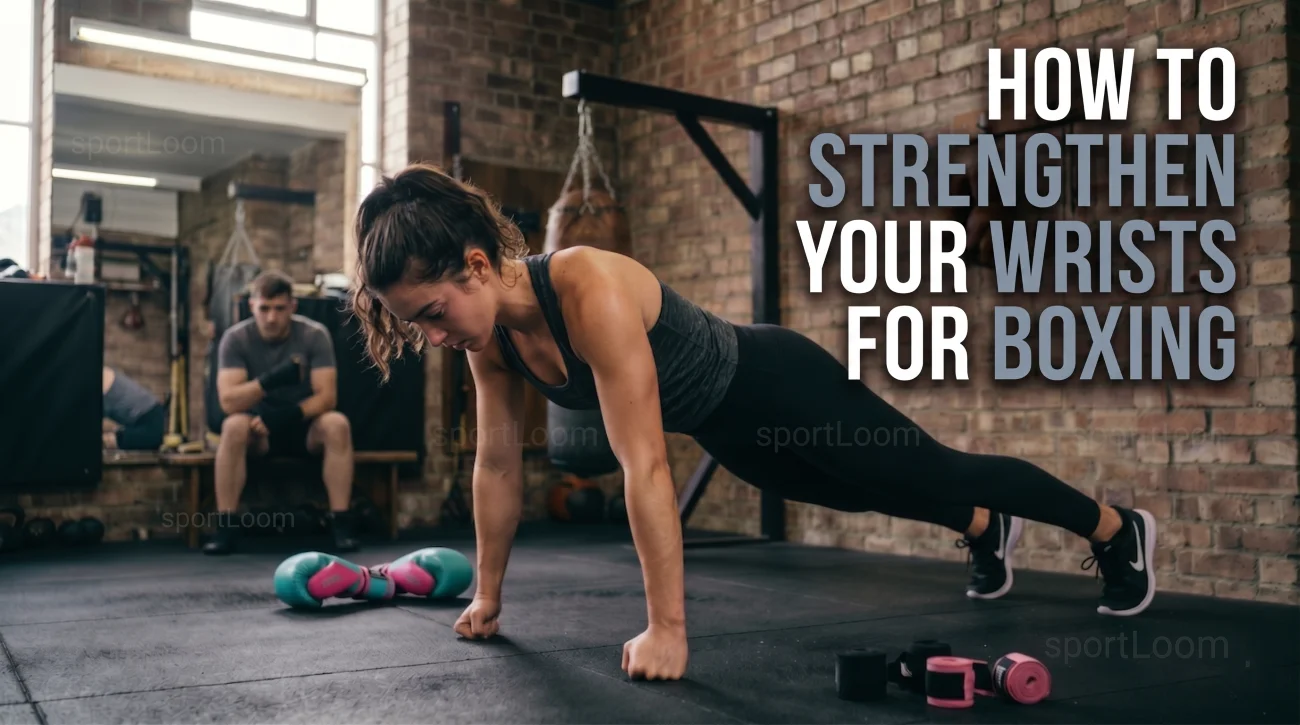
How to Strengthen Your Wrists for Boxing
If your wrists hurt when you hit the heavy bag, the problem is usually not just “weak wrists.”
Many beginners think they need harder knuckles, stronger gloves, or more aggressive hand conditioning. Sometimes they do need better gear. Sometimes they need better wraps. But very often, wrist pain in boxing comes from a mix of poor punch alignment, weak forearms, rushed bag work, and tissues that simply have not adapted yet.
This is why strengthening your wrists for boxing is not only about doing wrist curls or punching harder surfaces. It is about building the whole chain: hand position, fist alignment, forearm strength, wrist mobility, knuckle tolerance, and smart training habits.
If this sounds familiar, you are not alone. A lot of beginners feel fine during shadowboxing, then everything changes when they start hitting the bag with real force. The wrist bends. The knuckles land unevenly. Hooks feel awkward. The bag swings, the punch lands slightly wrong, and suddenly the wrist feels sharp, unstable, or sore.
This guide breaks down how to strengthen your wrists for boxing in a practical way. We will cover the exercises that actually help, how to condition your knuckles safely, when to do wrist work in your training week, and what mistakes to avoid.
If you are still learning the basics of hand protection, read our guide on how to wrap your hands for boxing. Strong wrists help, but bad wrapping can still make good training feel worse than it should.
Quick Answer: How Do You Strengthen Wrists for Boxing?
To strengthen your wrists for boxing, combine forearm strength exercises, knuckle push-ups, wrist mobility drills, controlled bag work, proper hand wrapping, and better punch alignment. Do not rely only on gloves or hard impact conditioning.
A good boxing wrist routine should include:
- Knuckle push-ups for fist alignment and wrist stability
- Wrist curls and reverse wrist curls for forearm strength
- Rice bucket or towel drills for grip and tendon conditioning
- Wrist flow drills for mobility and joint awareness
- Light technical bag rounds to practice landing with straight wrists
- Hand wraps before serious bag work or sparring
The key word is gradual. Wrists, knuckles, tendons, and small stabilizing muscles do not adapt well to ego training. If you suddenly add hard knuckle conditioning, bare-knuckle bag work, and high-volume push-ups in the same week, you are more likely to irritate your hands than strengthen them.
Why Beginners Get Wrist Pain in Boxing
Most wrist pain in beginner boxing is not mysterious. It usually comes from one of a few common problems.
The first problem is poor alignment. When you punch, your fist, wrist, and forearm should form one strong line. If your wrist bends on impact, force leaks into the joint instead of traveling through the arm structure.
The second problem is hitting too hard too early. Many beginners start heavy bag training with excitement. They throw big right hands, wide hooks, and full-power combinations before their technique can handle that force. What usually happens is simple: the punch lands slightly wrong, the wrist folds, and the hand starts to ache.
The third problem is poor wrapping. Hand wraps do not make you invincible, but they do help compress the hand, support the wrist, and keep the knuckles more organized inside the glove. If your wraps are loose, uneven, or missing entirely, your hands have to manage more impact by themselves.
Finally, some beginners use gloves that do not fit well. A glove that is too loose around the wrist, too roomy in the hand compartment, or too soft for heavy bag work can make stability harder. If you are comparing gear, our guide to best boxing gloves for wrist support explains why gloves can help but cannot replace real wrist strength.
What “Strong Wrists” Actually Means for Boxing
Strong wrists for boxing do not mean stiff wrists that never move. They mean wrists that can hold position under impact, recover quickly, and stay aligned when you are tired.
That requires several qualities at the same time:
- Forearm strength
- Grip endurance
- Wrist extension and flexion control
- Good fist position
- Knuckle awareness
- Shoulder and elbow alignment
- Smart punching technique
This is why wrist strengthening should not be separated from technique. You can do every forearm exercise in the gym, but if you throw hooks with a bent wrist or overextend your cross, you will still feel problems.
Best Wrist Strengthening Exercises for Boxing
1. Knuckle Push-Ups
Knuckle push-ups are one of the most useful boxing-specific exercises when they are done correctly.
They teach you to support bodyweight through the same fist position you want when punching. They also build wrist stability, knuckle tolerance, and awareness of whether your fist is straight or collapsing.
Start on a soft surface. A gym mat, folded towel, or boxing ring canvas is better than a hard floor at first. Make a proper fist and place weight through the first two knuckles, not the small knuckles on the outside of the hand.
For beginners, 2–3 sets of 5–10 controlled reps is enough. Do not chase pain. The goal is alignment, not suffering.
2. Wrist Curls and Reverse Wrist Curls
Basic wrist curls still work. They strengthen the forearm muscles that help control wrist flexion and extension.
Use light dumbbells. Sit down, rest your forearms on your thighs, and move only through the wrist. Do regular wrist curls with the palm facing up, then reverse wrist curls with the palm facing down.
The reverse version is especially useful because many beginners lack strength on the top side of the forearm. That weakness can show up when the wrist bends backward on impact.
3. Rice Bucket Training
Rice bucket training is popular in combat sports because it trains the hand, fingers, grip, and forearms in many small directions.
Put your hands into a bucket of rice and perform movements like opening the fingers, closing the fist, twisting, digging, and rotating the wrists. It looks simple, but it builds endurance in areas that normal gym exercises often miss.
This is useful for boxing because your hands have to stay organized round after round. Grip fatigue can make your fist lazy inside the glove, especially during long bag sessions.
4. Towel Hangs and Farmer Carries
Grip work matters more than beginners think. If your hands and forearms fatigue quickly, your wrist control usually fades too.
Towel hangs are simple: throw a towel over a pull-up bar, grip both sides, and hang. Farmer carries are just as useful: hold heavy dumbbells or kettlebells and walk with good posture.
You do not need extreme loads. You need clean, repeatable tension. Think strong hands, relaxed shoulders, and steady breathing.
5. Resistance Band Wrist Extensions
A light resistance band can help train wrist extension, radial deviation, ulnar deviation, and small stabilizing movements.
This is not glamorous training, but it is useful. Many wrist issues are not caused by one big weakness. They come from small stabilizers being unprepared for repeated impact.
Use slow reps. Stop before the wrist feels irritated. This is assistance work, not a max-effort lift.
Wrist Flow Conditioning Drill for Boxers
There is an old-school style of wrist conditioning where athletes move between different hand positions in a push-up stance. You may see versions of this in boxing gyms, wrestling rooms, martial arts classes, and calisthenics training.
A simple version looks like this:
- Start in a push-up position on your palms
- Shift to your fists
- Carefully move to the backs of the hands
- Return to open palms
- Repeat slowly before adding speed
Some experienced athletes add small hops between positions. For beginners, that is not the starting point.
The goal of this drill is wrist awareness, mobility, tendon adaptation, and comfort supporting bodyweight in different positions. It should not feel like you are attacking your joints.
Start with very low volume. Use your knees on the floor if needed. Move slowly. If the back-of-hand position feels too intense, skip it for now and work only palms-to-fists transitions.
Safety note: Wrist flow drills can be useful, but they are easy to overdo. If you feel sharp pain, pinching, numbness, or lingering joint pain, stop. Boxing conditioning should build your hands, not punish them.
How to Condition Your Knuckles Safely
Knuckle conditioning is one of the most misunderstood topics in boxing.
Some beginners hear old stories about fighters hitting walls, concrete, or hard objects. That is not the approach you want. Damaging your hands is not the same as strengthening them.
A safer approach is controlled, gradual exposure.
You can start with knuckle push-ups on a soft surface. Then use light technical punches on the heavy bag while wrapped and gloved. Focus on landing through the correct knuckles with a straight wrist. Over time, your hands become more comfortable with impact because your technique and tissues adapt together.
If you do light bare-knuckle tapping, keep it very controlled. Think gentle contact on a soft bag or mat, not hard punches. The purpose is awareness and alignment, not proving toughness.
For serious bag work, use wraps and gloves. If you are unsure what type of glove makes sense for bag training, read our guide to best boxing gloves for heavy bag training.
When Should You Do Wrist Strengthening for Boxing?
The best time to do wrist strengthening depends on the exercise.
Mobility and light activation can happen before boxing training. Strength and conditioning should usually happen after skill work or on separate strength days.
| Exercise Type | Best Time | Why |
|---|---|---|
| Light wrist mobility | Before training | Prepares the joints without fatiguing the hands |
| Knuckle push-ups | After boxing or separate day | Can fatigue wrist stabilizers if done before bag work |
| Wrist curls | After training | Strength work should not ruin punch control |
| Rice bucket | After training or recovery day | Good for endurance and tissue conditioning |
| Light bag alignment work | During technical rounds | Builds skill and wrist position together |
A simple schedule for beginners could be:
- 2–3 times per week: light wrist mobility before boxing
- 2 times per week: wrist curls, reverse curls, and rice bucket after training
- 1–2 times per week: knuckle push-ups with low volume
- Every bag session: focus on straight wrist alignment
Do not do hard wrist conditioning right before heavy bag rounds. Tired wrists are less stable wrists. If you fatigue your forearms first, then try to hit hard, your technique may fall apart.
For weekly planning, connect this with your overall boxing schedule. Our guide on how often you should train boxing can help you avoid adding too much extra work too quickly.
Technique Matters More Than Wrist Exercises
This is the part many beginners do not want to hear: wrist strengthening will not fix bad punching mechanics by itself.
If your wrist hurts every time you throw a right hand, look at how the punch lands. Are you overreaching? Is your elbow flaring? Are you landing with the small knuckles? Is the wrist bent when the glove hits the bag?
Many beginners do this: they stand too far away from the bag, reach for the target, and land at the end of the punch with a loose wrist. The shot feels powerful because the bag moves, but the structure is weak.
Good punching should feel connected. Your fist, wrist, elbow, shoulder, hip, and foot position should work together. If one part is off, the wrist often pays the price.
This is why technical heavy bag work matters. Do not only smash the bag. Use rounds where your goal is clean contact, balanced stance, and straight wrist alignment. Our article on how to hit a heavy bag properly covers this in more detail.
Common Wrist Strengthening Mistakes
Doing Too Much Too Soon
Wrists and knuckles adapt slowly. If you add knuckle push-ups, wrist flows, rice bucket work, and hard bag rounds all at once, soreness is almost guaranteed.
Confusing Pain With Progress
A little muscular fatigue is normal. Sharp joint pain is not. Numbness, swelling, or pain that lasts into the next session is a warning sign.
Ignoring Hand Wraps
Some beginners think strengthening means they no longer need wraps. That is backwards. Stronger wrists plus good wraps is a better combination than trying to prove you can train without support.
Only Training Flexion
Wrist curls are useful, but do not only train one direction. Reverse curls, band work, grip work, and mobility all matter.
Trying to Punch Through Wrist Pain
If your wrist hurts during bag work, do not just tighten your wraps and keep throwing bombs. Reduce power, check your technique, and find the cause.
Do Gloves and Wraps Strengthen Your Wrists?
Gloves and wraps do not truly strengthen your wrists. They support your hands while you train.
That difference matters.
Good gloves can help keep the wrist more stable. Hand wraps can compress the hand and reduce unwanted movement inside the glove. But if your wrist collapses because your punch alignment is poor or your forearms fatigue quickly, gear will not solve the whole problem.
Think of wraps and gloves as protection while you build skill and strength. They are not a replacement for skill and strength.
If you are new and still building your setup, start with proper wraps, well-fitting gloves, and controlled bag work. Then add wrist conditioning gradually.
Simple Wrist Strength Routine for Beginner Boxers
Here is a simple routine you can add 2 times per week after boxing training.
- Wrist circles: 30 seconds each direction
- Knuckle push-ups: 2 sets of 5–10 reps
- Wrist curls: 2 sets of 12–15 reps
- Reverse wrist curls: 2 sets of 12–15 reps
- Rice bucket or towel grip work: 2–3 minutes
- Light wrist stretching: 2 minutes
Keep the first two weeks easy. Your goal is to finish feeling like you could have done more. That is how you build consistency.
After a few weeks, you can add volume slowly. Do not increase everything at once. Add a few reps, one extra set, or one extra drill — not all three.
FAQ: Strengthening Wrists for Boxing
Do knuckle push-ups help boxing?
Yes, knuckle push-ups can help boxing because they train fist alignment, wrist stability, and comfort supporting weight through the punching position. Start on a soft surface and keep the volume low at first.
Why do my wrists hurt when I hit the heavy bag?
Wrist pain on the heavy bag usually comes from poor punch alignment, hitting too hard too soon, weak forearms, bad wrapping, or gloves that do not fit well. Reduce power and check your technique before adding more conditioning.
Should boxers condition their knuckles?
Boxers can condition their knuckles gradually, but they should avoid extreme methods like punching walls or hard surfaces. Knuckle push-ups, controlled bag work, and proper fist alignment are safer and more useful for most beginners.
Do hand wraps make wrists stronger?
Hand wraps do not make wrists stronger directly. They support the wrist and hand during training. You still need forearm strength, technique, and gradual conditioning.
Can weak wrists affect punching power?
Yes. If your wrist collapses on impact, force does not transfer cleanly into the target. A strong, aligned wrist helps your punch feel more solid and reduces wasted force.
How often should I train wrists for boxing?
Most beginners can train wrists 2–3 times per week with light to moderate volume. Mobility can be done more often, but hard conditioning should be limited and progressed slowly.
Are wrist flow drills safe?
Wrist flow drills can be safe if done slowly, with low volume, and without sharp pain. Beginners should avoid explosive hopping variations until their wrists are prepared.
Can gloves fix weak wrists?
No glove can fully fix weak wrists or poor technique. Supportive gloves can help, but they work best when combined with wraps, strength work, and clean punch mechanics.
Final Thoughts
Strengthening your wrists for boxing is not about destroying your hands or proving how much pain you can tolerate.
It is about building a stronger structure for punching.
Use knuckle push-ups, wrist curls, rice bucket work, grip training, mobility drills, and controlled bag rounds. Wrap your hands properly. Use gloves that fit. Most importantly, learn to land punches with a straight wrist and clean alignment.
If you do that consistently, your wrists will feel more stable, your punches will feel cleaner, and your heavy bag rounds will become safer and more productive.