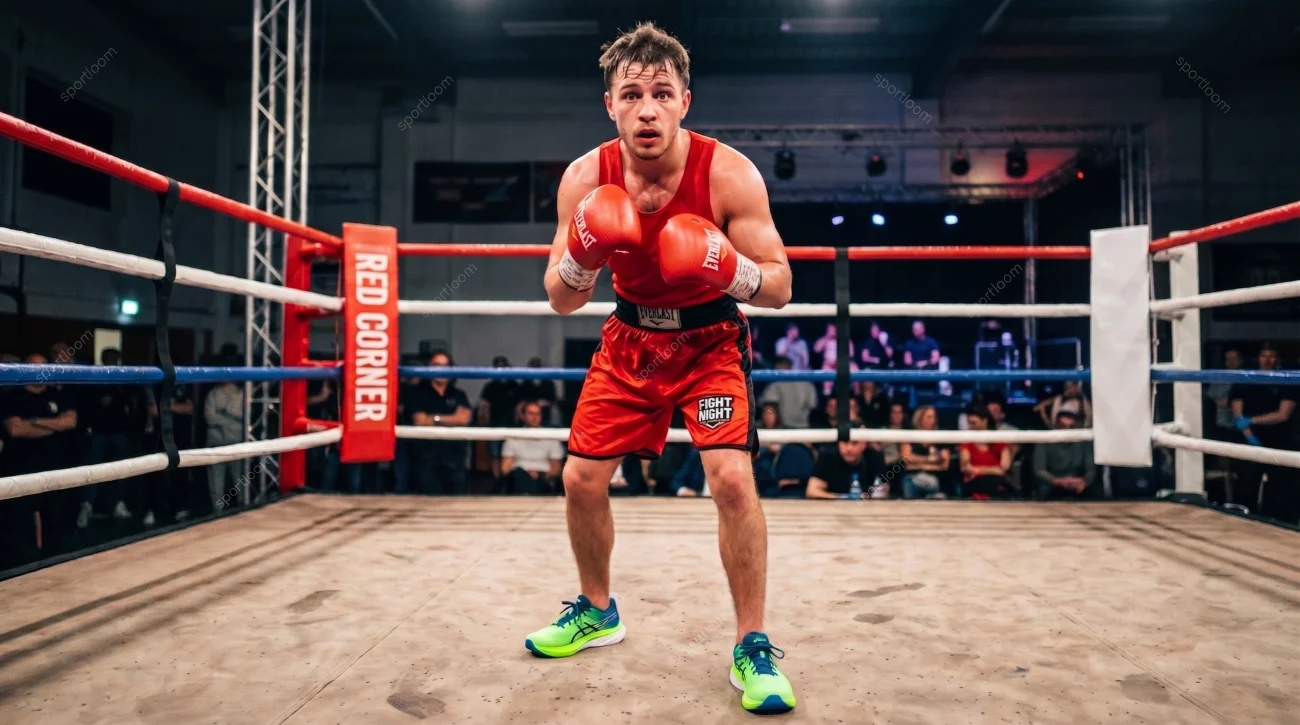
Can You Use Running Shoes for Boxing?
Yes, if it is your first boxing class and you have nothing else.
No, not as a long-term solution.
Running shoes are not designed for boxing. Their thick cushioning, raised heel, flexible upper, and forward-focused sole can make footwork, pivots, and balance worse.
I would not delay your first boxing class just because you do not own boxing shoes yet. Show up in your running shoes, learn the basics, and see whether you enjoy the sport.
But if you decide to keep training, proper boxing shoes should be one of your first gear purchases. You will usually notice the difference in your balance, pivots, and connection to the floor from the first session.
Short Answer
Yes — for your first workout.
No — for regular training.
Running shoes are acceptable when they are the only athletic shoes you own, but they are a poor match for boxing movement and should be replaced once you know you plan to continue.
Why Running Shoes Are Bad for Boxing
Running shoes are built to help you move forward efficiently and absorb repeated impact from the ground.
Boxing asks for something different. You need to move forward, backward, sideways, and at angles while staying balanced enough to punch, defend, and pivot.
That is why a shoe that feels comfortable on a run can feel awkward in a boxing gym.
Thick Cushioning
Most running shoes have a thick foam midsole designed to reduce impact while running.
That cushioning is useful when your foot repeatedly lands in a straight running stride. In boxing, however, it can make the shoe feel soft and unstable during lateral movement.
When you shift your weight, step off at an angle, or throw a hook, the foam can compress under one side of your foot. Instead of feeling planted, you may feel as if your foot is rolling slightly inside the shoe.
Many beginners mistake softness for support. In boxing, too much softness often reduces your connection to the floor.
Heel-to-Toe Drop
Running shoes often place the heel higher than the forefoot. This difference is called heel-to-toe drop.
A raised heel can help some runners move through their stride, but it changes how your weight sits over your feet.
In boxing, you want a stable base and the freedom to distribute weight naturally between the front and rear foot. A noticeable heel lift can push you forward, make your stance feel less neutral, and interfere with balance during punches.
It does not mean you will instantly fall over. The problem is subtler: your stance and footwork may never feel as clean as they should.
Poor Lateral Support
Running shoes are mainly designed for forward movement.
Boxing includes constant lateral steps, quick direction changes, angle exits, and defensive movement. During those actions, your foot needs to stay secure over the sole.
In many running shoes, the upper is soft and flexible. That can allow your foot to slide toward the outside edge of the shoe when you move sideways.
What usually happens is that the shoe feels comfortable during warm-ups, but less controlled once the footwork becomes faster.
This is especially noticeable during partner drills and sparring, where you cannot plan every step in advance.
Too Much Grip
Running shoe outsoles are made to grip pavement, paths, treadmills, and outdoor surfaces.
That grip can become a problem when you pivot on a boxing gym floor or ring canvas.
A boxing shoe should grip enough to stop you from sliding, but still allow the foot to rotate smoothly. Many running shoes grab the floor too aggressively.
If the sole sticks while your hips and upper body rotate, the turning force has to go somewhere. Your knee or ankle may take more of it.
You may not notice this during your first class because your pivots are still small. It becomes more obvious when you start throwing combinations with proper hip rotation.
Too Much Flexibility in the Wrong Places
Running shoes need to flex through a running stride. Boxing shoes need to support quick changes of direction while keeping the foot connected to the sole.
A running shoe may bend easily at the forefoot but still feel bulky through the midsole. Its upper may stretch when you push sideways. That combination is comfortable for running but less precise for boxing.
The issue is not that running shoes are too flexible in general. They are flexible for the wrong movement pattern.
How Running Shoes Affect Boxing Footwork
You can still learn a stance, throw a jab, and hit a heavy bag in running shoes. The problem is that the shoes can make correct movement feel harder than it needs to be.
Common problems include:
- Feeling too tall or unstable because of the thick sole
- Catching the floor during pivots
- Letting the foot slide inside the upper during side steps
- Rocking onto the heel when moving backward
- Feeling disconnected from the floor
- Using smaller, more cautious steps because the shoes feel bulky
For a complete beginner, the danger is not only discomfort. You can start adapting your technique to the shoe.
For example, you may avoid pivoting fully because the sole sticks. You may widen your stance because the cushioning feels unstable. You may lift your feet too high because the outsole catches the floor.
Then, when you eventually switch to boxing shoes, you have to correct habits that were partly created by the wrong footwear.
Our guide to basic boxing footwork for beginners explains the movement patterns your shoes should support rather than fight against.
When It Is Okay to Wear Running Shoes
If today is your first boxing class and running shoes are the only athletic shoes you own, wear them.
Your coach would much rather see you at the gym than waiting another two weeks for perfect gear.
For a first class, you will probably spend time learning your stance, basic punches, simple movement, and gym rules. You are not preparing for an amateur bout that evening.
Running shoes are also acceptable temporarily when:
- You are trying boxing before buying equipment
- You are attending a fitness boxing class with limited footwork
- Your boxing shoes have not arrived yet
- You forgot your usual training shoes
- You are doing light bag work without hard pivots
Just understand what “temporarily” means.
It means a few introductory sessions while you decide whether boxing is for you. It does not mean training in running shoes for six months because they have not caused an obvious injury yet.
Practical rule: do not let footwear stop you from starting boxing, but do not let temporary footwear become your permanent setup.
Which Running Shoes Are Least Bad for Boxing?
If you must use running shoes, choose the pair that is closest to a simple, low-profile training shoe.
Look for:
- A lower and firmer sole
- Less heel-to-toe drop
- A stable upper that holds the foot securely
- A flatter outsole without large aggressive lugs
- A snug fit without heel movement
Avoid:
- Very thick maximal-cushion shoes
- Trail running shoes with deep tread
- Soft shoes that lean heavily from side to side
- Loose shoes where the heel lifts
- Worn-out shoes with uneven soles
A basic flat running shoe is still not a boxing shoe, but it is usually less troublesome than a tall, soft, heavily cushioned model.
Better Alternatives to Running Shoes
If you plan to train regularly, this is the order I would consider.
1. Boxing Shoes
Boxing shoes are the best option because they are built for boxing movement.
They usually have a thin sole, controlled traction, a secure fit, and enough support to keep the foot stable without making it difficult to pivot.
You do not need an expensive professional model as your first pair. A simple beginner boxing shoe is already a major improvement over a typical running shoe.
Start with our guides to how to choose boxing shoes and the best boxing shoes for beginners.
2. Wrestling Shoes
Wrestling shoes are usually the best substitute for boxing shoes.
They are lightweight, low to the ground, secure around the foot, and designed for combat-sport movement.
The main drawback is that their grip can feel too aggressive for boxing pivots. Still, they are generally much closer to boxing shoes than running shoes are.
For a detailed breakdown, read boxing shoes vs wrestling shoes.
3. Cross-Training Shoes
Cross-training shoes are not ideal, but some models can work reasonably well for general boxing classes.
They are usually flatter and more stable than running shoes. They also provide better lateral support because they are designed for gym movements rather than only forward running.
Choose a light, low-profile pair. Avoid heavy lifting shoes and bulky trainers.
4. Basketball Shoes
Basketball shoes provide better lateral support than running shoes, but they are usually heavier and more cushioned than boxing shoes.
A lightweight basketball shoe can work temporarily, especially if it fits securely. It is still not ideal for smooth pivots or long boxing sessions.
5. Running Shoes
Running shoes belong at the bottom of the list.
Use them when they are all you have today, not because they are a good choice for boxing.
What Changes When You Switch to Boxing Shoes?
The first thing most beginners notice is not ankle support. It is floor feel.
Boxing shoes make it easier to feel where your weight is and how your feet are positioned. The shoe feels more like part of your foot and less like a thick platform underneath it.
You may notice:
- Cleaner pivots
- Faster direction changes
- Better balance while punching
- Less movement inside the shoe
- A more stable stance
- Less effort during repeated footwork drills
Proper boxing shoes will not fix bad technique by themselves. They simply stop your footwear from making the technique harder.
Fit also matters. A boxing shoe that is too loose can be almost as annoying as the wrong type of shoe. Before ordering, read how boxing shoes should fit.
Common Beginner Mistakes
Buying Boxing Shoes Before the First Class
You do not need to order a full set of equipment before you have even tried boxing.
Use the athletic shoes you already own for the first session. Confirm that you like the gym, the coach, and the training style. Then buy equipment with more confidence.
Continuing in Running Shoes Because They Feel Comfortable
Running shoes often feel more comfortable when you stand still because the cushioning is soft.
That does not mean they perform better during boxing movement. Judge shoes while stepping, pivoting, punching, and changing direction—not while walking around the changing room.
Using Trail Running Shoes
Trail shoes are among the worst running shoes for boxing because their outsole is designed to grip uneven outdoor surfaces.
The deep tread can catch the floor and make pivots unnecessarily difficult.
Wearing Boxing Shoes Outside
Once you buy boxing shoes, keep them for indoor training.
Walking outside wears the thin outsole quickly and carries dirt onto the gym floor or ring canvas.
Choosing Shoes Only for Ankle Height
A high collar does not automatically mean better boxing support.
The sole, fit, traction, and how securely the shoe holds your foot matter just as much. Our comparison of high-top vs low-top boxing shoes explains the tradeoff more clearly.
FAQ
Can I wear running shoes to my first boxing class?
Yes. If running shoes are the only athletic shoes you own, wear them to your first class. Starting is more important than having perfect footwear. Replace them with boxing shoes if you decide to train regularly.
Can I use running shoes for heavy bag training?
You can use them temporarily for light bag work, but they are not ideal. The thick sole and strong grip can make pivots less stable, especially when throwing hooks and combinations with full hip rotation.
Are flat running shoes better for boxing?
A low, firm running shoe is usually less problematic than a highly cushioned model, but it still lacks the secure fit, pivot-friendly sole, and movement design of a boxing shoe.
Are wrestling shoes better than running shoes for boxing?
Yes. Wrestling shoes are generally lighter, flatter, and more secure during lateral movement. Their grip may still feel too strong for some boxing pivots, but they are a much better temporary alternative than running shoes.
Can running shoes cause knee pain when boxing?
They can contribute to discomfort if the outsole grips the floor while your body rotates, because more twisting force may reach the knee or ankle. Footwear is not the only possible cause of pain, but sticky, unstable shoes can make poor movement mechanics worse.
Do boxing shoes make a big difference for beginners?
Yes, especially once footwork drills become more serious. Beginners often notice better balance, easier pivots, and a stronger connection to the floor after switching from cushioned athletic shoes.
How soon should I buy boxing shoes?
Buy them once you know you plan to continue training. You do not need them before your first lesson, but they should be one of your first gear purchases after gloves and hand wraps.
Can I box barefoot instead?
Usually no. Boxing gyms normally require clean indoor shoes for hygiene, grip, and foot protection. Follow your gym's rules rather than training barefoot without permission.
Bottom Line
Do not let footwear stop you from starting boxing.
If running shoes are all you have today, use them.
Go to the class, learn the stance, throw your first punches, and find out whether you actually enjoy the sport.
But if you plan to train regularly, buy proper boxing shoes as soon as you can.
Running shoes are made for forward motion and impact absorption. Boxing shoes are made for balance, pivots, lateral movement, and control.
You will usually notice the difference in your footwork from the first session.
First lesson in running shoes? Completely fine.
Months of boxing in running shoes? Not a good plan.
Related Articles and Reviews
Check it now