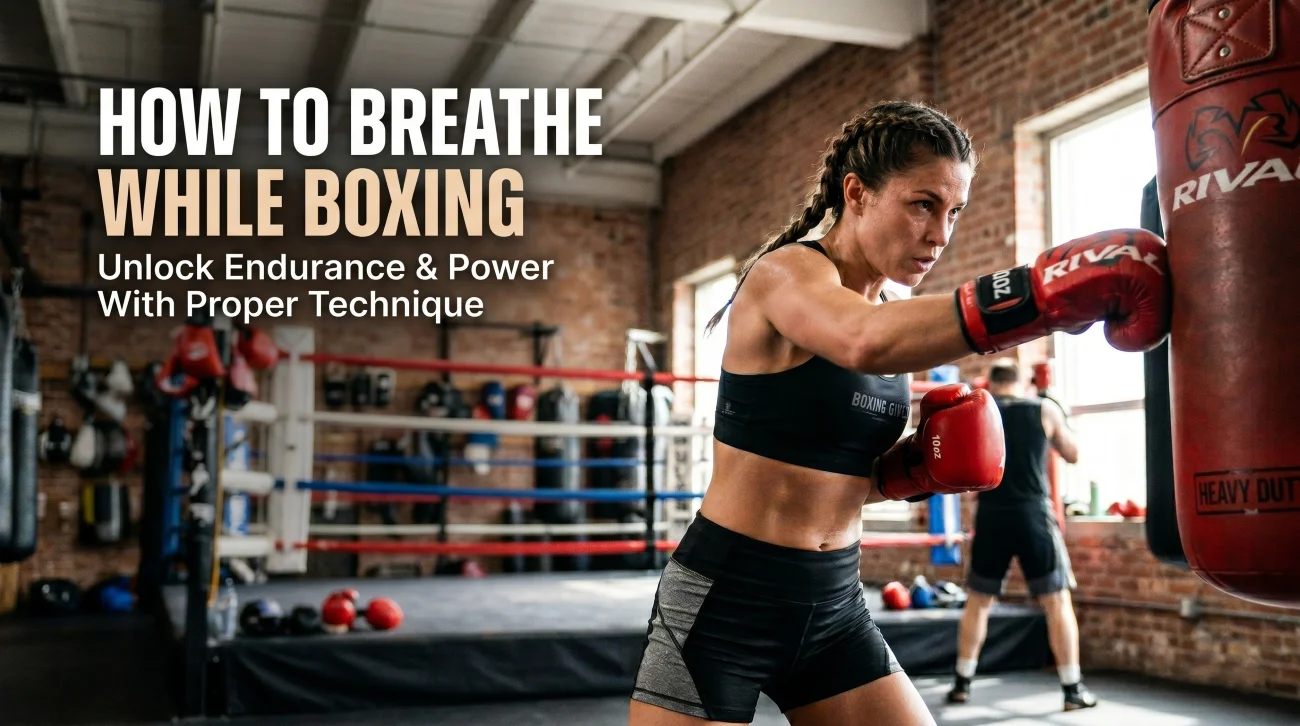
How to Breathe While Boxing
Most beginners do not notice their breathing until they are already tired.
They start the round feeling good, throw a few fast combinations, move around the bag, maybe try to copy a pro-style rhythm — and suddenly their shoulders are burning, their mouth is open, and every punch feels heavy.
If this sounds familiar, the problem is not always bad cardio.
A lot of the time, it is bad breathing.
Learning how to breathe while boxing helps you stay relaxed, punch sharper, recover between exchanges, and avoid that panicked feeling where your body starts working against you. Good breathing will not magically turn you into an elite fighter, but it can make your training feel completely different.
Boxing breathing is not complicated. You do not need a special secret method. You need to stop holding your breath, exhale when you punch, breathe calmly when you move, and recover your rhythm between combinations.
In this guide, we will break down how boxing breathing actually works, why beginners get it wrong, and how to practice it during shadowboxing, heavy bag rounds, pads, and sparring.
If you are still building your fundamentals, pair this with our guide on how to throw a jab correctly and basic boxing footwork for beginners.
Quick Answer: How Should You Breathe While Boxing?
The simple rule is this:
Exhale sharply when you punch, breathe calmly through the nose or relaxed mouth when you move, and use small recovery breaths between combinations.
Most boxers make a short “tss,” “shh,” or “huh” sound when they punch. The sound is not the goal by itself. It is just a simple way to force a short exhale.
When you breathe correctly in boxing, you should feel more relaxed in your shoulders, less tense in your jaw, and less rushed after combinations.
A good beginner pattern looks like this:
- Relax before the punch
- Short exhale on each punch
- Small inhale as the hand comes back
- Reset your breathing while moving
- Never hold your breath during combinations
The biggest mistake is trying to take big dramatic breaths while punching. Boxing breathing should be short, controlled, and connected to your rhythm.
Why Breathing Matters in Boxing
Breathing affects almost everything you do in boxing.
It affects your stamina, your punch speed, your ability to relax, and your decision-making under pressure. When beginners get tired, they often blame their lungs. But what usually happens is simpler: they punch while holding tension everywhere.
They tighten the shoulders. They clench the jaw. They squeeze the fists too early. They hold their breath during a three-punch combination. Then they wonder why a short round feels like a sprint.
Breathing gives your body rhythm. Without rhythm, boxing becomes chaotic.
Breathing Helps You Stay Relaxed
Relaxation is one of the most underrated boxing skills.
A tense boxer burns energy quickly. Even simple punches feel heavy because the body is fighting itself. Good breathing tells your body that it does not need to panic.
That is why experienced boxers can look calm even when they are working hard. They are not calm because boxing is easy. They are calm because their breathing, footwork, and punch rhythm are connected.
Breathing Makes Punches Sharper
A short exhale helps you release force at the right moment.
Think of the punch as a quick snap, not a long push. When you exhale sharply, your body naturally tightens for a split second on impact and then relaxes again.
That is the rhythm you want: relaxed, snap, relaxed.
Many beginners stay tense before, during, and after the punch. That makes them slower and more tired.
Breathing Helps You Recover Between Exchanges
Boxing is not one long nonstop attack.
Even during hard rounds, there are tiny recovery moments: after a combination, while stepping out, after slipping, while circling, or when the bag swings away.
Good boxers use those moments to reset their breathing. Beginners often waste them by staying tense and staring at the target.
This is especially important on the heavy bag. If your bag rounds feel messy, read our guide on how to hit a heavy bag properly.
Common Beginner Breathing Mistakes
Mistake 1: Holding Your Breath During Combinations
This is the most common mistake.
A beginner throws a jab-cross-hook and unknowingly holds air inside the whole time. The body gets tight. The shoulders rise. The punches slow down. After a few combinations, the round already feels exhausting.
The fix is simple: give every punch its own short exhale.
Not one giant breath for the whole combination. Not a long shout. Just small sharp exhales.
Mistake 2: Breathing Too Big
Some beginners overcorrect.
They hear that breathing matters, so they start taking huge breaths between every punch. That creates another problem: they lose rhythm.
Boxing breathing should match boxing movement. It is quick, compact, and repeatable.
Mistake 3: Opening the Mouth Too Much
During hard training, you will sometimes breathe through your mouth. That is normal.
But beginners often leave the mouth wide open, especially when tired. In sparring, that is a bad habit because an open mouth can make impact more uncomfortable and can disturb your jaw position.
Try to keep the jaw relaxed but not hanging open. Use a mouthguard during sparring and learn to breathe around it calmly.
Mistake 4: Tensing the Shoulders When Breathing
Watch beginners on the bag and you will often see the shoulders climb toward the ears.
That is usually a sign of panic breathing and unnecessary tension. Your shoulders should help protect your chin and deliver punches, but they should not stay locked the whole round.
Mistake 5: Forgetting to Breathe While Defending
People talk about exhaling on punches, but breathing during defense matters too.
When beginners slip, roll, block, or move backward, they often freeze and hold their breath. Then they try to counter while already tense.
The better habit is to keep small breaths even while defending. Defense should not feel like an emergency pause.
How to Breathe When You Punch
Every punch should have a short exhale.
That includes the jab, cross, hook, uppercut, body shot, and even light touch punches. The exhale does not need to be loud, but it should be clear enough that you feel the rhythm.
Use a Short Sound
A simple sound helps many beginners.
- “Tss” for fast straight punches
- “Shh” for combinations
- “Huh” for heavier shots
Do not worry about sounding cool. The point is to avoid holding your breath.
If you feel embarrassed making noise, start quietly during shadowboxing. Over time it becomes automatic.
Do Not Empty Your Lungs Completely
The exhale should be sharp, not dramatic.
If you blow out too much air on every punch, you will feel drained. Think of it like releasing a small burst of pressure, not deflating your whole body.
Match the Breath to the Punch
A jab might have a tiny exhale. A hard cross might have a stronger one. A fast four-punch combination needs four short pulses.
Example:
- Jab: short exhale
- Cross: short exhale
- Lead hook: short exhale
- Step out: calm recovery breath
This keeps the combination from becoming one tense effort.
How to Breathe While Moving
Boxing is not only punching. You also need to breathe while moving, resetting, defending, and thinking.
This is where many beginners struggle.
They breathe during warm-up. They breathe during rest. But once the round starts, they become stiff and reactive.
Use Movement as a Reset
After a combination, step out and take a controlled breath.
For example:
- Jab-cross-hook
- Step out
- Small inhale
- Relax shoulders
- Come back behind the jab
This sounds basic, but it changes the whole round. You stop rushing. You stop punching just because the bag is there. You begin to box in phases.
Do Not Chase the Bag While Gasping
A common heavy bag mistake is chasing the bag while tired.
The bag swings away, the beginner follows it, throws more punches, breathes harder, and loses shape. That is not good boxing practice.
Let the bag move. Reset your feet. Breathe. Then work again.
If this happens often, our article on common heavy bag mistakes will help you clean up the round.
Breathe During Footwork Drills
Footwork drills are perfect for breathing practice because there is no pressure to punch hard.
Move forward, backward, left, and right while keeping a steady rhythm. Do not let every step become tense. Your breathing should stay smooth enough that you can still think.
How to Practice Boxing Breathing
Shadowboxing Drill: Exhale on Every Punch
Start with shadowboxing because there is no bag impact and no opponent.
Do three slow rounds:
- Round 1: only jab and cross, short exhale on every punch
- Round 2: add hooks and uppercuts, keep the same breathing rhythm
- Round 3: add defense and footwork, breathe while slipping and stepping
The goal is not speed. The goal is awareness.
If you are new to this, start with how to shadow box for beginners.
Heavy Bag Drill: Three-Punch Breathing
Use simple combinations.
- Jab-cross-hook
- Jab-cross-body shot
- Double jab-cross
Each punch gets one exhale. After the combination, step out and breathe calmly.
Do not go full power. Many beginners try to fix breathing while throwing every shot at 100%. That makes learning harder.
You can also connect this with how hard you should hit the heavy bag.
Pad Drill: Breathe Before the Coach Calls
Pad work often exposes bad breathing because beginners wait in tension.
They stand still, hold their breath, wait for the call, explode, then freeze again.
Instead, stay loose while waiting. Take small breaths. When the combination comes, exhale on each shot and reset immediately after.
Sparring Drill: Breathe While Defending
In sparring, breathing becomes harder because stress goes up.
One useful beginner drill is light technical sparring where your only focus is breathing during defense. Block, move, breathe. Slip, breathe. Step out, breathe.
Do not turn it into a fight. The goal is staying calm under pressure.
If you are preparing for partner work, make sure your gear is appropriate. You can check our guide to best boxing gloves for sparring and best boxing headgear for sparring.
Should You Breathe Through Your Nose or Mouth in Boxing?
The honest answer: both can happen.
During low-intensity movement, shadowboxing, and warm-up work, nasal breathing can help you stay calm and controlled. It is a good way to practice relaxation.
During hard bag rounds, intense pad work, or sparring, you will often breathe through your mouth too. That is normal. Boxing is intense, and your body will demand air.
The practical rule is:
- Use nasal breathing when intensity is low enough
- Use short mouth exhales when punching
- Do not leave your mouth wide open during sparring
- Learn to breathe with a mouthguard before hard rounds
Beginners sometimes get stuck trying to follow one perfect breathing rule. Real boxing is messier. The key is control, not perfection.
Is It Bad Cardio or Bad Breathing?
Sometimes it is both.
If you are new to boxing, your cardio will need time. Boxing rounds are different from jogging or lifting weights. You have bursts of punching, footwork, tension, defense, and short recovery moments.
But bad breathing makes your cardio look worse than it is.
Here are signs your breathing is the bigger problem:
- You get tired after short combinations, not after long rounds
- Your shoulders burn very early
- You forget to exhale when punching
- You feel panicked instead of normally tired
- You gasp after every exchange
- Your punches get stiff quickly
Here are signs your conditioning also needs work:
- You cannot recover between rounds
- Your legs fade quickly
- You lose form even at controlled intensity
- You struggle with basic three-minute rounds
The solution is not to destroy yourself every session. Train breathing and conditioning together. Controlled rounds build better habits than panic rounds.
For a realistic training rhythm, read how often you should train boxing.
Breathing Tips by Training Type
Shadowboxing
Use shadowboxing to make breathing automatic. Stay relaxed, exhale on every punch, and avoid rushing. If your breathing gets messy during shadowboxing, it will be worse on the bag.
Heavy Bag
The heavy bag tempts beginners to hold their breath and swing hard. Keep combinations short, exhale on impact, and step away to reset. Do not make every round a power test.
Pad Work
Pad work requires fast reactions. Breathe while waiting for the call, then exhale on every punch. Try not to freeze between combinations.
Sparring
In sparring, your breathing will reveal your stress level. If you hold your breath every time your partner attacks, slow the round down. Learn to breathe while blocking, moving, and seeing punches.
Conditioning Rounds
During conditioning, breathing will be harder, but you still need rhythm. Do not turn every conditioning round into ugly survival. Keep your form and breathe with purpose.
Beginner Tips for Better Boxing Breathing
- Start slower than you want. Breathing habits improve faster when you are not rushing.
- Use simple combinations. Jab-cross-hook is enough to train breathing rhythm.
- Listen for breath holding. If every punch is silent and tense, you may be holding air.
- Relax your jaw. A clenched jaw often comes with tight shoulders and bad breathing.
- Reset after combinations. Step out, breathe, then attack again.
- Do not copy pro intensity too early. Pros look relaxed because they built that rhythm over time.
- Practice with your mouthguard. Sparring breathing feels different with a mouthguard in.
A useful rule: if you cannot breathe while doing the drill, slow the drill down until you can. Speed built on panic does not transfer well.
A Simple Boxing Breathing Round for Beginners
Try this during your next heavy bag or shadowboxing session.
| Time | Focus | Breathing Goal |
|---|---|---|
| 0:00–0:30 | Light movement and jab | Stay relaxed, short exhale on jab |
| 0:30–1:00 | Jab-cross only | Two separate exhales |
| 1:00–1:30 | Three-punch combinations | One exhale per punch, reset after |
| 1:30–2:00 | Defense and footwork | Breathe while slipping and stepping |
| 2:00–2:30 | Controlled power shots | Sharp exhale, do not empty lungs |
| 2:30–3:00 | Move, jab, reset | Finish calm, not panicked |
This round is not about destroying yourself. It is about learning control. Once the breathing feels natural, you can increase pace.
FAQ: How to Breathe While Boxing
Why do boxers make a noise when they punch?
Boxers make a short sound because it forces a sharp exhale. The sound helps prevent breath holding and keeps punches relaxed and rhythmic.
Should I exhale on every punch?
Yes, you should use a short exhale on every punch. The exhale does not need to be loud or huge, but each punch should have its own breath.
Should I breathe through my nose while boxing?
Nasal breathing is useful during low-intensity movement, warm-ups, and controlled shadowboxing. During hard rounds, you will often use mouth breathing too, especially for short punch exhales.
Why do I get tired so fast when boxing?
You may be holding your breath, staying too tense, punching too hard, or lacking boxing-specific conditioning. Beginners often confuse bad breathing with bad cardio because both make rounds feel exhausting.
How do I breathe with a mouthguard?
Keep your jaw relaxed, do not bite down constantly, and practice light drills with the mouthguard before sparring. You need to get used to breathing calmly while it is in.
Is breathing different for heavy bag training and sparring?
The basic rule is the same: exhale on punches and breathe during movement. Sparring is harder because stress makes beginners hold their breath while defending or waiting for punches.
Can better breathing improve punching power?
Better breathing can help you punch sharper because it improves timing, relaxation, and force release. It will not replace technique, but it supports better punching mechanics.
How long does it take to breathe naturally while boxing?
Most beginners feel improvement after a few focused sessions, but making it automatic takes longer. Practice during shadowboxing, bag work, pads, and light sparring until you no longer need to think about it.
Final Thoughts: Good Boxing Breathing Is Simple, But Not Automatic
Learning how to breathe while boxing is not about memorizing a complex system.
It is about building a simple habit: exhale when you punch, stay relaxed when you move, and recover your breathing between exchanges.
Many beginners hold their breath because boxing feels exciting, stressful, and fast. That is normal at first. But if you keep training that way, you will always feel more tired than you should.
Start slow. Use short combinations. Make a small exhale on every punch. Step out and reset. Practice during shadowboxing before trying to fix it during hard sparring.
Once your breathing improves, your boxing starts to feel cleaner. Your punches become less forced. Your shoulders stay looser. Your rounds feel more controlled.
That is the real goal: not breathing perfectly, but boxing without panic.